





Less unplanned downtime
We implement preventive maintenance logic, service triggers, and real-time alerts so vehicles do not disappear into the repair shop without warning.
 Get in touch
TwinCore builds custom fleet management software that gives logistics operators real-time control over vehicle performance, utilization, compliance, and maintenance workflows. When fleet data is spread across disconnected tools, spreadsheets, and manual logs, teams lose visibility into utilization, fuel spend, and maintenance risk. TwinCore builds fleet systems that centralize telemetry, jobs, and service workflows in one place, helping operators reduce downtime, stay ahead of compliance, and make better operational decisions.

TwinCore has elevated the client's customers to the next level of supply chain management. The team is highly cost-efficient from a project management standpoint, and internal stakeholders are particularly impressed with the service provider's team dynamic.












Fleet operations break down the same way every time: data lives in five tools, maintenance is reactive, compliance is a scramble, and dispatch ends up running the fleet by phone calls and guesswork. TwinCore designs and develops custom fleet management systems that pull your fleet into one operating layer: vehicles, drivers, telemetry, inspections, fuel, and maintenance workflows, all working together.
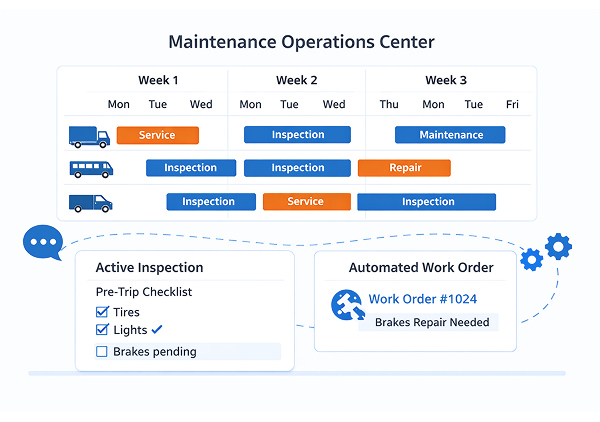
We implement preventive maintenance logic, service triggers, and real-time alerts so vehicles do not disappear into the repair shop without warning.
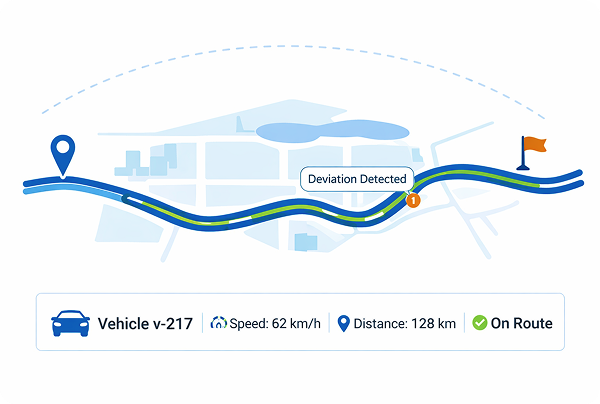
We unify driver, vehicle, and job status into one execution view so routing changes and priorities do not require ten manual check-ins.
We build inspection flows, digital logs, and audit trails so documentation is generated by the process.

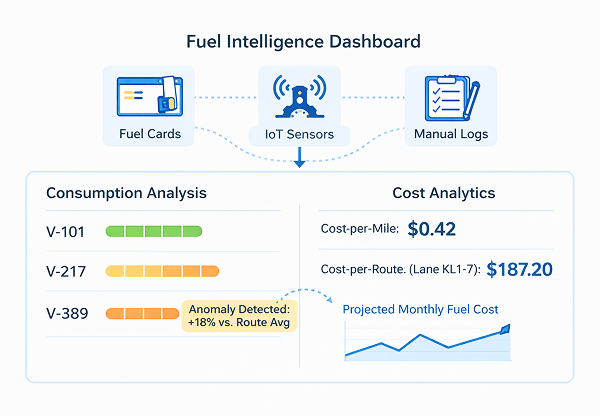
We connect fuel data, utilisation, and routes to reporting that shows where money leaks and why.

We ship tracking and automated status updates that reduce calls and keep customer service aligned with operations.

We build consistent workflows, permissions, and reporting so adding vehicles, drivers, and depots does not break control.
Most organizations already run a mix of systems: ERP, TMS, WMS, accounting, telematics, and carrier tools. A good fleet system doesn't replace them. It connects them. We design fleet platforms to integrate with the systems your operation already depends on. Integrations are built around APIs and clean events, so your system doesn't collapse whenever you add another connection.
1 /5

Licensing costs tied to seat counts or vehicle numbers quickly outpace the operational savings these platforms deliver.
Rigid platform structures fail to accommodate the rule variations required across different asset classes and operational models.

Manual coordination introduces delays, errors, and invisible gaps that accumulate into operational risk over time.

Data siloed inside vendor platforms cannot flow into the operational workflows where it would actually create value.

Manual compliance processes introduce gaps that only become visible during audits or after incidents have already occurred.

Inconsistent data across disconnected tools creates reconciliation overhead and undermines trust in any single report.

Managing fleet operations across separate systems that don't share data creates coordination friction that grows with every new vehicle added.
What You Get
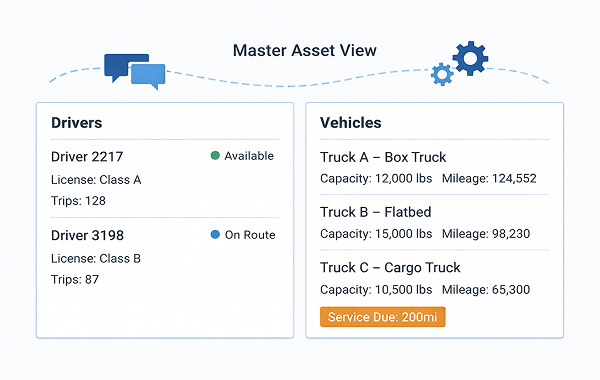
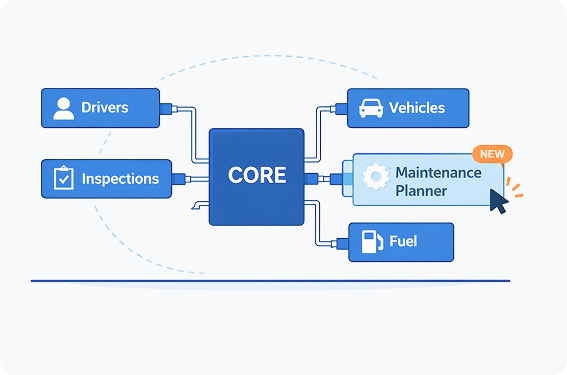
Holds everything related to drivers: documents, certifications, availability, performance history, assignment logs, and compliance info. Dispatchers always know who is available, legal, and ready for the next shift.
Full vehicle lifecycle in one place. Specs, mileage, fuel type, insurance, service history, diagnostic data, and assignment history. Combined with tracking and inspections, it becomes the operational control panel for your fleet.
Pre-trip, post-trip, periodic, or custom inspection flows. You get structured checklists, automatic flags when something fails, and visible records that your team and regulators can rely on.
Tracks fuel usage across vehicles, routes, and drivers. Helps detect anomalies, reduce waste, and understand true cost-per-mile and cost-per-route. Pulls data from fuel cards, IoT devices, or manual entries.
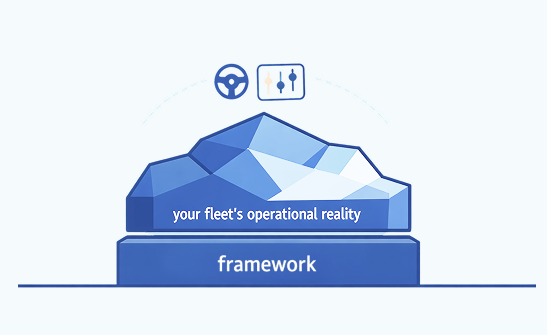
Fleet systems usually break down not because of GPS or dashboards, but because real-world operations don't fit into generic software. Different vehicle types, driver policies, inspection rules, fuel tracking logic, and contract-level routing create complexity that ready-made platforms rarely handle cleanly.
This approach is built around that reality. The focus is on stable architecture, clear data models, and predictable system behaviour, not quick feature sprawl. The result is software that stays readable for engineers and usable for dispatchers as fleets grow from dozens to hundreds of vehicles.
The logistics framework behind this is modular by design. That means it doesn't force "all or nothing" decisions. Systems can start simple and evolve without painful migrations or rewrites when business requirements change.
For fleet-heavy teams, the real advantage is control. Not over a vendor's roadmap, but over how your own operational logic is designed, scaled, and extended over time.
Because everything is modular and API-first, companies use the fleet platform as the foundation for bigger logistics systems. You're not choosing a boxed app. You're choosing a foundation.
Running a fleet gets harder as the business grows. Costs creep up, small delays turn into big ones, and disconnected tools keep adding friction. A proper fleet platform removes that friction and gives your team control instead of chaos.
If you want software that matches your operation instead of forcing you into a template, we can help you build it — or integrate the modules you need right now and expand over time.
1 /7

As fleets grow, costs creep up, small delays turn into big ones, and disconnected tools keep adding friction.
A proper fleet platform removes that friction and gives your team control instead of constant reaction.
If you want fleet management software that matches how your operation actually works today — and can grow with it tomorrow — we can help design and build it, or start by integrating the modules you need most and expand from there.
Let's talk about your fleet and see what a platform built around your reality could look like.
Case study of a real-time load board that connects carriers and brokers, adds order tracking, predictive demand analytics, and secure payments for a US logistics firm.
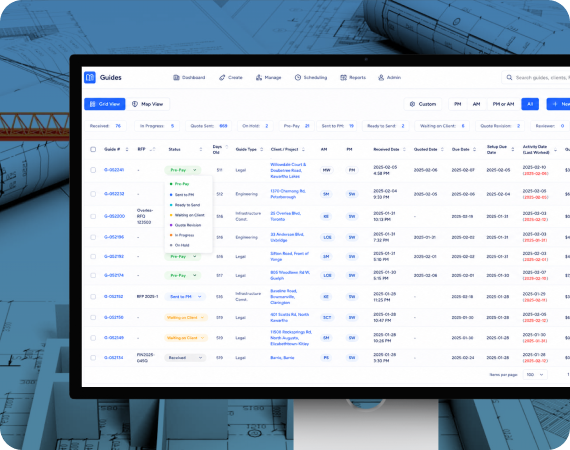
Custom order management system with rate engine, real-time tracking, and cost analytics built for a US logistics company, helping control routes and operational costs.
How a custom freight rate engine with 30+ carrier APIs helped a US logistics company automate LTL/FTL pricing, cut operational time, and centralize control.
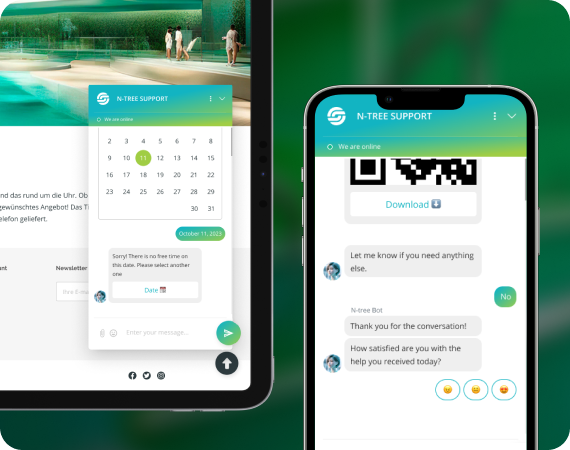
TwinCore built a nopCommerce AI sales chatbot with conversational product search, store-aware answers, in-chat booking, and QR tickets for services.
How TwinCore delivered a legacy ASP.NET modernization for a land-surveying ERP — migrating to modern .NET and Angular, with Redis caching and no downtime.

A practical roadmap for modernizing legacy logistics systems with .NET — audit, migration phases, risk...

How to turn supply chain data into decisions: logistics dashboards, KPIs that matter, actionable design,...

How custom software drives digital transformation in logistics — real success stories, common...

How to integrate carriers with your TMS in 2026: EDI for freight, REST API for FedEx, UPS, DHL....

Why .NET remains a strong choice for logistics enterprise systems in 2026 — performance, typed business...

A practical roadmap for building a logistics platform, from a focused MVP to an enterprise-grade system....

A practical guide to logistics API integrations: REST vs EDI, TMS-ERP-WMS connections, carrier APIs,...

What features do freight brokers and 3PLs actually need in software? Multi-client billing, dynamic...

7 practical AI use cases in logistics: predictive ETA, demand forecasting, dynamic routing, freight...

Discover key Logistics & Supply chain trends for 2026, including automation, AI-driven logistics, and...