





What you get
By the end of an AI MVP engagement, you own a working product and everything needed to run and scale it.
 Get in touch
Build and Validate Your AI MVP in 6–10 Weeks. We design, prototype, and develop AI products with measurable accuracy, cost, and business value.

TwinCore has elevated the client's customers to the next level of supply chain management. The team is highly cost-efficient from a project management standpoint, and internal stakeholders are particularly impressed with the service provider's team dynamic.










An AI MVP is a minimum viable product built to test whether an AI-powered feature actually solves a real problem, before you pay for a full build. A traditional MVP answers one question: does anyone want this? An AI MVP has to answer two at once. It checks product-market fit and whether the underlying AI or ML approach works well enough on real data to ship.
AI features can fail for reasons traditional software does not. A chatbot can look sharp in a scripted demo and then hallucinate on a real customer question. A recommendation model can score well on clean test data and fall apart on messy production data. AI product validation exists to catch that gap early and cheaply.
An AI MVP built this way tests three things for founders and product teams:

Whether Claude, GPT, or a custom model can reliably do what the product needs.
Whether the cost per interaction stays sustainable as usage grows.
Whether users value the AI feature enough to pay for it.
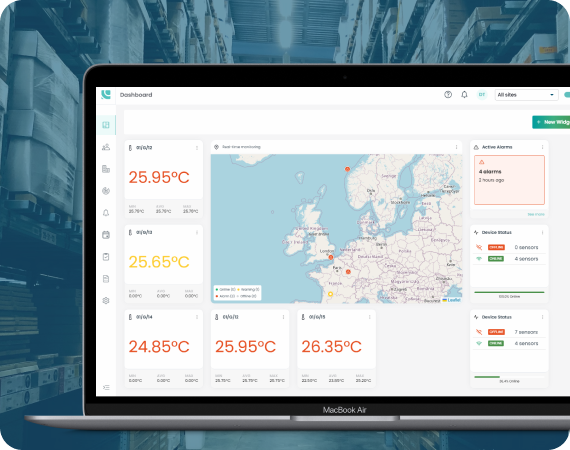
How TwinCore built a multi-tenant temperature monitoring platform for cold-chain and pharma compliance — real-time SignalR alerts, audit log, GDP/HACCP-ready reports.
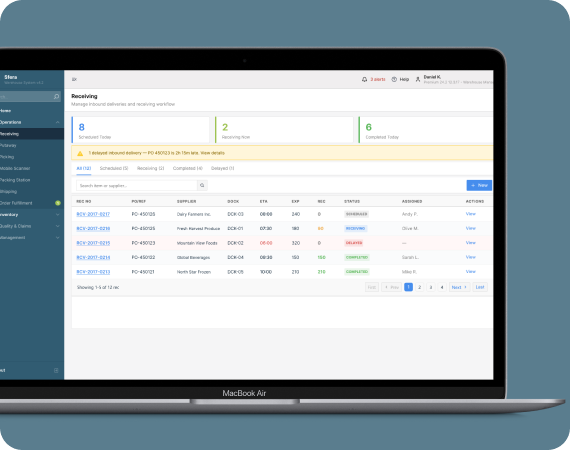
A manufacturer's legacy .NET app rebuilt into a responsive Angular and .NET WMS with FEFO picking, lot and bin tracking, and handheld scanning.
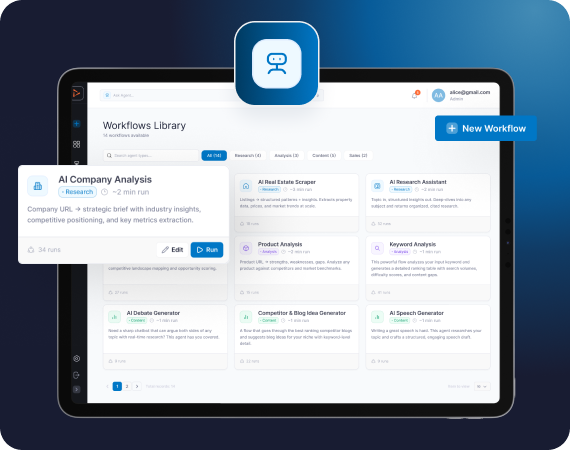
TwinCore built a custom AI agent platform for a US client: 14 reusable agent types for research, data extraction, analysis, and monitoring.
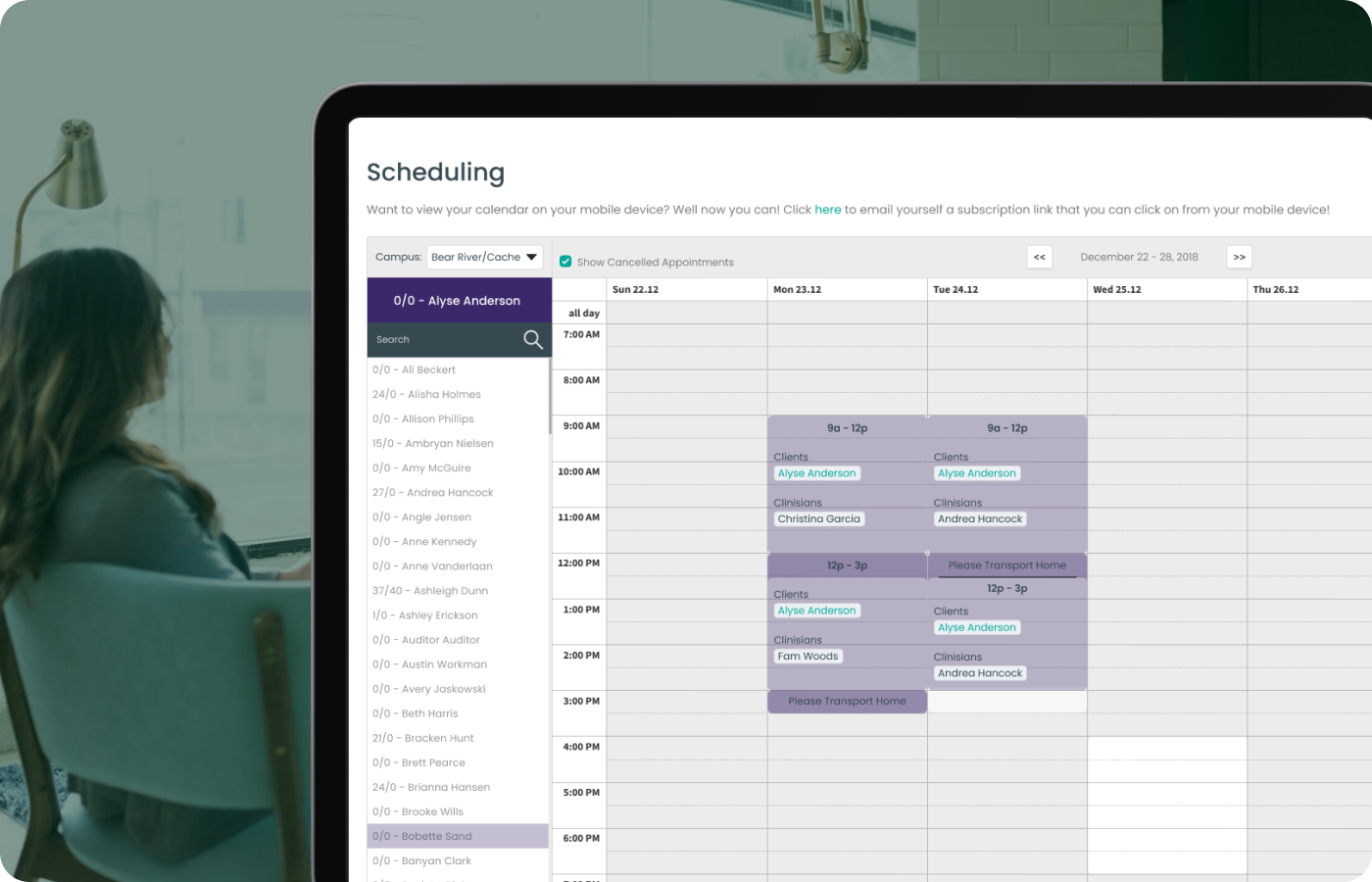
Our team successfully supported and enhanced a custom software solution for a US-based mental health clinic, focusing on improving operational efficiency, treatment tracking, and reporting capabilities. Designed for healthcare professionals, the platform streamlines the management of Electronic Health Records (EHR) and Electronic Medical Records (EMR) while adhering to strict HIPAA regulations.
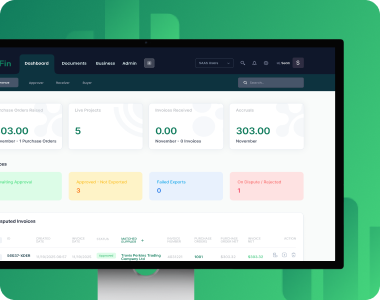
The goal of this project was to design and implement a scalable, secure, and extensible backend system for automating the accounts payable (AP) lifecycle - from purchase requisition and approval workflows to invoice processing, supplier management, and payment scheduling.

best fit for:
Founders validating an AI product idea before committing to a full build.
Product teams adding an AI feature to an existing product and unsure it will hold up on real data.
Companies replacing a manual workflow with an AI-driven one and needing proof before they roll it out.
Teams with a working prototype that performs in a demo but breaks on real, messy data.
We scope each AI feature MVP to prove one clear thing, then cut everything that does not serve that proof.
Conversational interfaces powered by Claude or GPT, scoped to one use case such as customer support, an internal knowledge assistant, or a sales copilot. You learn whether the answers hold up before you wire the assistant into everything.
A traditional MVP carries one main risk: building something users do not want. An AI MVP adds another: the model may not perform reliably or remain affordable at scale.
Poor or insufficient data undermines AI performance, so our process starts with a data assessment and model evaluation before any production code. Gartner predicted that at least 30% of generative AI projects would be abandoned after the proof-of-concept stage. Common reasons include poor data quality, rising costs, weak risk controls, and unclear business value. Testing the data and model early helps identify problems before the MVP reaches production.
| Criterion | Traditional MVP | AI MVP |
|---|---|---|
| What it validates | Does anyone want this feature? | Does anyone want it, and does the AI approach work reliably on real data at a cost you can afford? |
| Main risk | Building something nobody wants | Building something nobody wants, plus the model underperforming once real data hits it |
| When failure shows | During or after launch | Often invisible until production, unless you test the model first |
| What scoping must include | UI and feature scope | UI and feature scope, plus a data assessment and model evaluation phase upfront |
Before you commit to a build, start with a fixed-scope AI MVP Feasibility Review. The Review is a concrete first step, easier to act on than an open-ended consultation. It tells you whether the idea is worth building before you spend on it.
You walk away with:
1/6
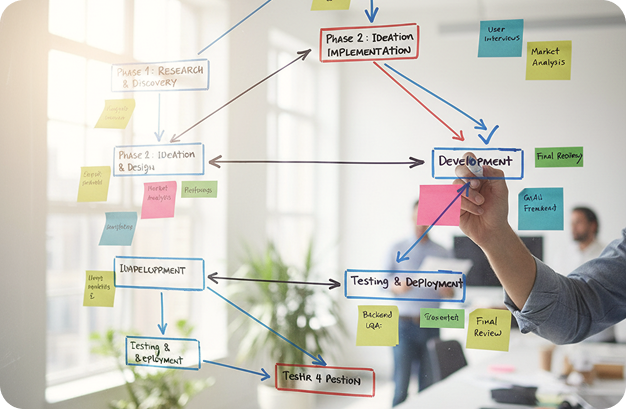
Six steps take you from an idea to a validated build. The order matters: we test the model risk before we write production code, not after.
1/6
By the end of an AI MVP engagement, you own a working product and everything needed to run and scale it.

A functional product tested on real inputs, not a scripted demo.

Accuracy, reliability, and cost per use measured against your data.

The setup that performed best in evaluation, documented so it is reproducible.

Production-grade code and infrastructure you own outright.
The pipeline that feeds the model, wired into your systems.

A running environment, ready to extend into production.

A clear path from MVP to a production-grade AI system.

What it will cost to run at your expected usage.
A proof of concept tests technical feasibility, whether the thing can be built at all. A prototype checks the flow and the UX with something clickable. An MVP goes further and ships to real users to see whether they want it. Our MVP development services span all three, from early proof of concept development and prototype development to custom MVP development you can extend into production.
| Stage | Goal | Result |
|---|---|---|
| POC | Prove technical feasibility | Working technical proof |
| Prototype | Test UX and product flow | Clickable experience |
| MVP | Validate with real users | Production-ready core product |
| Scale | Add features and grow | Mature product |
TwinCore has delivered 100+ software projects since 2011. Our team of 30+ specialists has experience building AI-powered products for logistics, fintech, and healthcare. Our AI MVP Development Services cover the full journey from feasibility testing to production development and scaling. As dedicated AI MVP experts, we validate the AI feature before you fund the full build. Our team operates from Chicago and Tallinn.

You get an enterprise-grade MVP built as real, maintainable software, not a disposable prototype. The code and architecture extend into production, so a validated MVP becomes the foundation of the real product.

Logistics, fintech, and healthcare context shapes what the AI feature should do. We know where a predictive ETA or a fraud score has to be right.
Model selection, data pipeline, backend, and frontend come from one team. You are not stitching together a prompt shop, a backend contractor, and a design freelancer.

We tell you upfront if an AI approach won't work reliably, before you spend budget building it, even when that means a smaller or different MVP than you planned. We would rather identify an unviable approach early than let you invest in a product the data cannot support.
Pick the model that matches your current stage
A defined timeline and budget for a validated scope, once discovery has set the boundaries. Best when you know what to prove.
Tell us about your AI product concept. Our AI-Powered MVP Development Services help you scope a lean, fast MVP that proves both user value and technical feasibility, and we'll flag the model risks before you fund the build.

A practical roadmap for building a logistics platform, from a focused MVP to an enterprise-grade system....

7 practical AI use cases in logistics: predictive ETA, demand forecasting, dynamic routing, freight...

Discover key Logistics & Supply chain trends for 2026, including automation, AI-driven logistics, and...

From ML.NET to Semantic Kernel and Azure OpenAI — explore the best AI tools, libraries, and frameworks...

A practical, step-by-step technical approach to modernizing legacy .NET applications — from codebase...