




benefits
What you get
Every engagement ends with a system your team owns and can run without us.
 Get in touch
Build Claude-powered features, agents, and automations with senior software engineers who integrate the Claude API, Claude Code, and the Claude Agent SDK into production systems. You get software your team can run, change, and keep.
* TwinCore is an independent software development partner and is not affiliated with Anthropic.

TwinCore has elevated the client's customers to the next level of supply chain management. The team is highly cost-efficient from a project management standpoint, and internal stakeholders are particularly impressed with the service provider's team dynamic.













Detail-oriented AI developer who meticulously builds robust Retrieval-Augmented Generation (RAG) pipelines. By seamlessly integrating VectorDB with the Claude API, they create highly context-aware applications. If you need intelligent, data-driven solutions, there’s no better candidate!

A highly adaptable software engineer with a deep understanding of modern AI integrations. From streamlining workflows using the Claude CLI to deploying complex OpenAI models, they are ready to step into fast-moving AI projects and drive them forward.

Innovative and open-minded AI specialist who meticulously crafts every API call. With extensive experience in the Claude API and VectorDB, they deliver fast, creative, and scalable AI features. Seize the opportunity to bring this visionary professional on board today.

This developer is fully equipped to elevate your AI initiatives. With a strong grasp of RAG architectures and dual expertise in OpenAI and the Claude API, they are prepared to lead your next-generation application development to success.

From optimizing complex VectorDB queries to automating deployments via the Claude CLI, this candidate knows the modern AI stack inside out. A dependable team player ready to integrate cutting-edge language models into your existing enterprise workflows.

An exceptional AI developer specializing in creating custom intelligent assistants. Leveraging OpenAI, the Claude API, and VectorDB, they build responsive, knowledge-backed tools. This candidate is well-prepared to enhance your team's capabilities immediately.

Dedicated and analytical engineer focused on maximizing AI accuracy through RAG methodologies. If your project demands precise context retrieval and seamless Claude API implementation, there is no better candidate to push your product to the next level.

This candidate brings a wealth of experience in orchestrating massive datasets with VectorDB and fine-tuning OpenAI integrations. They are ready to drive your AI-powered analytics and generative projects forward. Don't miss the chance to hire this skilled professional.

A proactive developer who writes clean, maintainable code for complex AI systems. Their proficiency with the Claude CLI and RAG methodologies ensures fast iterations and highly reliable outputs. A perfect fit for agile teams pushing the boundaries of AI.
Claude is a family of AI models from Anthropic used for chat features, document processing, code generation, and agent workflows. A Claude developer is a software engineer who puts those models into your product and your internal systems. The same engineer keeps them working once real users hit them.
When you hire a Claude developer from TwinCore, you get an engineer who ships production software, not a prompt-only specialist. The same person who designs the prompt writes the C# or Python around it, the retry logic, the eval suite, and the deployment pipeline.
Companies hire Claude developers for one of three jobs, and buyers often mix them up
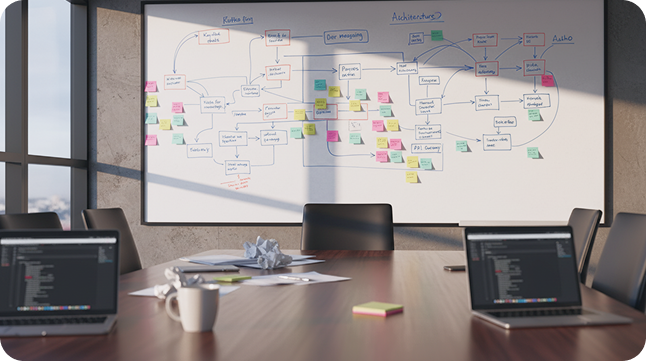
An engineer calls the Claude API from your backend so your app can summarize a contract, answer a support ticket, or draft a reply.
Your own developers run Claude Code, the agentic coding tool, to write, review, and refactor code faster.
An engineer builds an MCP server so Claude can read your database, query your ERP, and act on real records instead of guessing. MCP stands for Model Context Protocol, the open standard for connecting AI models to external tools and data.
Embed Claude into your existing product, covering chat interfaces, content generation, document analysis, and support triage.
Our Claude API integration services handle the parts that break in production. Streaming, retries, token budgeting, and a fallback path for when the model returns something your UI cannot render.
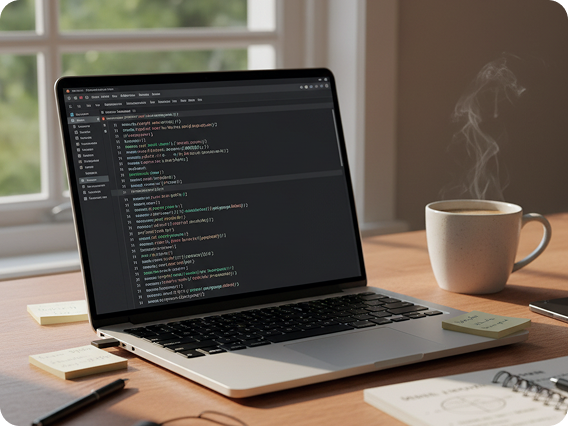
Roll out Claude Code across your team and make it stick. Our Claude Code experts set up repository context files, permissions, hooks, and CI usage so the tool follows your conventions instead of inventing its own.
Teams that hire Claude Code developers get the tool wired into their repo, their CI, and their review rules. Successful adoption depends more on repository configuration, permissions, and development workflows than on model quality alone.

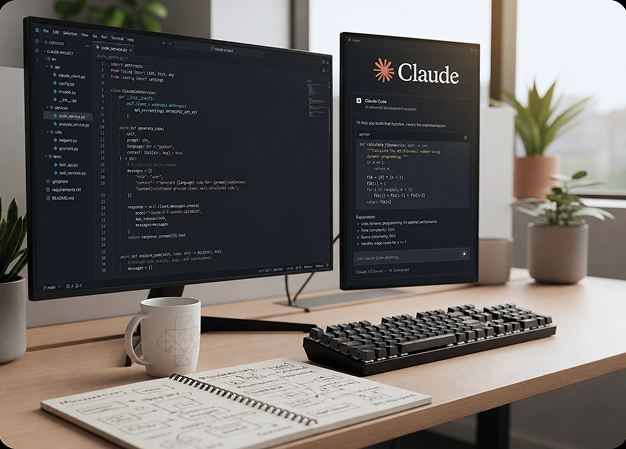
Build production agents on the Claude Agent SDK, available in Python and TypeScript. The SDK gives you the same agent loop, tool set, and context management that power Claude Code.
Companies hire a Claude Agent SDK developer when an automation must execute a multi-step workflow. The agent reads the exception, checks three systems, and proposes an action. A human approves it before the agent writes the record.

Connect Claude to the systems where your data actually lives. A Claude MCP developer writes the server that exposes your Postgres tables, your TMS, or your internal REST API to the model.
Permissions are scoped per tool, so an agent can read shipment status while write access remains restricted.

Ground Claude's answers in your documents, contracts, and tickets through a retrieval pipeline of chunking, embeddings, a vector index, and a reranking step.
Without retrieval, the model answers from general knowledge. With it, the answer cites your SOP.

Write the system prompts, then prove they hold. We build eval sets from your real inputs and score every prompt change against them.
Guardrails and human approval steps go in front of any action where a wrong answer costs money.

MIT's NANDA initiative studied 300 public AI deployments in 2025 and found that about 95% of enterprise GenAI pilots produced no measurable P&L impact. The models were rarely the problem. Integration was, and that is the part we build for.

We take over pilots that work in the demo and fall apart on real data
We fix what breaks your pilots:
Inconsistent outputs the UI cannot rely on.
Weak retrieval that pulls the wrong context into the prompt.
Token costs that push the per-transaction price past what the workflow is worth.
Tool permissions that let an agent write where it should only read.
Missing monitoring and evaluations, so no one sees a regression until a user hits it.
Agents that pass a scripted demo and fail on the inputs your operation actually sends.
One or more Claude-focused engineers join your team, work in your sprints, and report to your management. You set priorities day to day.
Best for: teams that already have a roadmap and need AI capacity inside it.
How fast you start. After the discovery call we share matching engineer profiles within a few business days. A dedicated engineer can begin inside two weeks, once you have interviewed and approved them.
Low-risk engagement. Dedicated engagements start with a 1-week trial. If an engineer is not the right fit, we replace them at no cost. No long-term lock-in, and you can end a dedicated engagement on 30 days' notice.

1/7
Every engagement ends with a system your team owns and can run without us.






Model usage is billed separately by Anthropic or your cloud provider and sits outside the table above. We estimate this cost during the assessment, so you see the per-transaction cost before development starts. You get a fixed estimate after the discovery call.
| Engagement | Typical range |
|---|---|
| Dedicated Claude developer | $35–$65/hr by seniority and scope |
| Focused integration (one feature) | From $5,000 fixed project price |
| Full agentic system with custom MCP servers and data infrastructure | $20,000+ typical starting range |
| Consulting and advisory | scoped individually based on your goals |
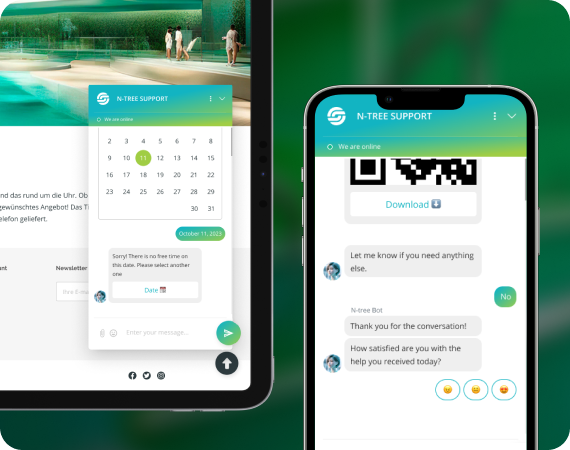
TwinCore built a nopCommerce AI sales chatbot with conversational product search, store-aware answers, in-chat booking, and QR tickets for services.
How TwinCore delivered a legacy ASP.NET modernization for a land-surveying ERP — migrating to modern .NET and Angular, with Redis caching and no downtime.
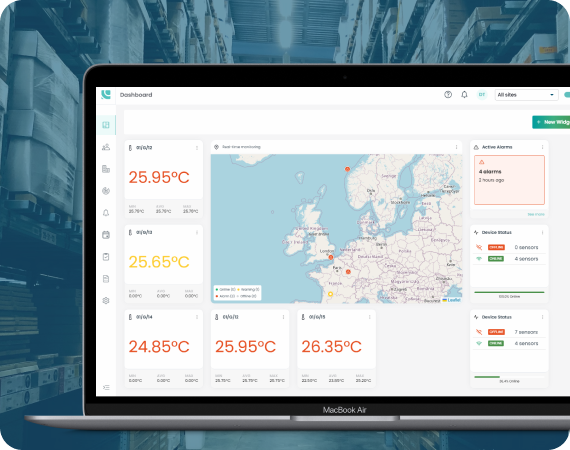
How TwinCore built a multi-tenant temperature monitoring platform for cold-chain and pharma compliance — real-time SignalR alerts, audit log, GDP/HACCP-ready reports.
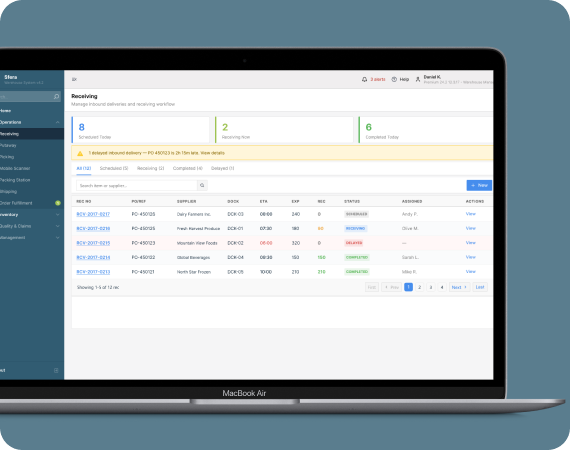
A manufacturer's legacy .NET app rebuilt into a responsive Angular and .NET WMS with FEFO picking, lot and bin tracking, and handheld scanning.
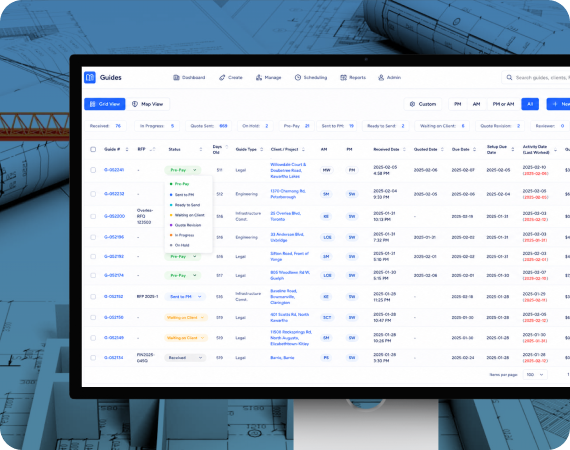
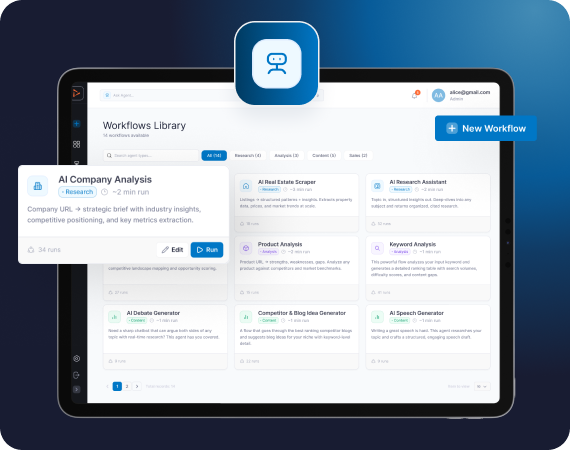
TwinCore built a custom AI agent platform for a US client: 14 reusable agent types for research, data extraction, analysis, and monitoring.

Learn how to hire a .NET developer, including essential skills, hiring platforms, and why TwinCore is...

Discover how web development costs are changing in 2026. Learn about key factors influencing project...

How much does an AI MVP cost, how long does it take, and what actually needs validating? A practical,...

A practical, step-by-step technical approach to modernizing legacy .NET applications — from codebase...

A practical roadmap for modernizing legacy logistics systems with .NET — audit, migration phases, risk...