















Agentic Development Services

We build your software faster by combining senior engineers with AI coding agents, without compromising architecture, review, or code quality. This is agentic software development as a delivery model: an AI-augmented process in which senior engineers retain ownership of every decision.

  • TwinCore has elevated the client's customers to the next level of supply chain management. The team is highly cost-efficient from a project management standpoint, and internal stakeholders are particularly impressed with the service provider's team dynamic.

    Alex Lopatkin

    Alex Lopatkin

    Amous

  • Bonusme
  • Amous
  • Cross
  • Ntree
  • Catalyst
  • Baddi
  • Friction
  • Sensilla
  • Schwim

30+

engineering professionals

100+

delivered projects

USA

Chicago

What is agentic development

Agentic development is how we build software, not an AI agent product we sell you. Our engineers use AI coding agents throughout the development process to write, review, test, and refactor your software faster. It is AI-augmented software development, where senior engineers stay in control of every decision.

Senior engineer directing an AI coding agent on a laptop
  • AI Coding agents

    The agents handle repetitive, well-defined work such as scaffolding, boilerplate, test generation, first-pass code review, and mechanical refactoring. Senior developers direct that work and own the parts that matter: system architecture, business logic, and final code quality. AI-assisted software development speeds up implementation while engineers retain ownership of design decisions.

  • AI Coding agents

    Unlike a manual-first workflow where developers write every line by hand, our engineers use AI coding agents for clearly scoped implementation, testing, and refactoring. This approach is also different from building "AI agents" as a product for your business. That is a separate offering, covered on our AI Agent Development page.

  • core reassurance

    The core reassurance is simple. AI agents write code, humans own the decisions, and every agent-generated change goes through senior developer review before it ships.

Case Studies

  • Canada

    Legacy ASP.NET modernization for a land-surveying ERP

    How TwinCore delivered a legacy ASP.NET modernization for a land-surveying ERP — migrating to modern .NET and Angular, with Redis caching and no downtime.

    40% improvement in operational data visibility
    55% faster retrieval of necessary project records
  • United Kingdom

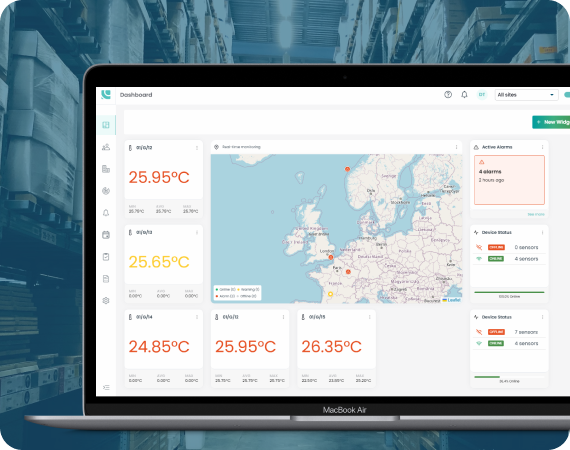
    Real-time temperature monitoring platform for cold-chain compliance

    How TwinCore built a multi-tenant temperature monitoring platform for cold-chain and pharma compliance — real-time SignalR alerts, audit log, GDP/HACCP-ready reports.

    40% improvement in operational data visibility
    55% faster retrieval of necessary project records
  • USA

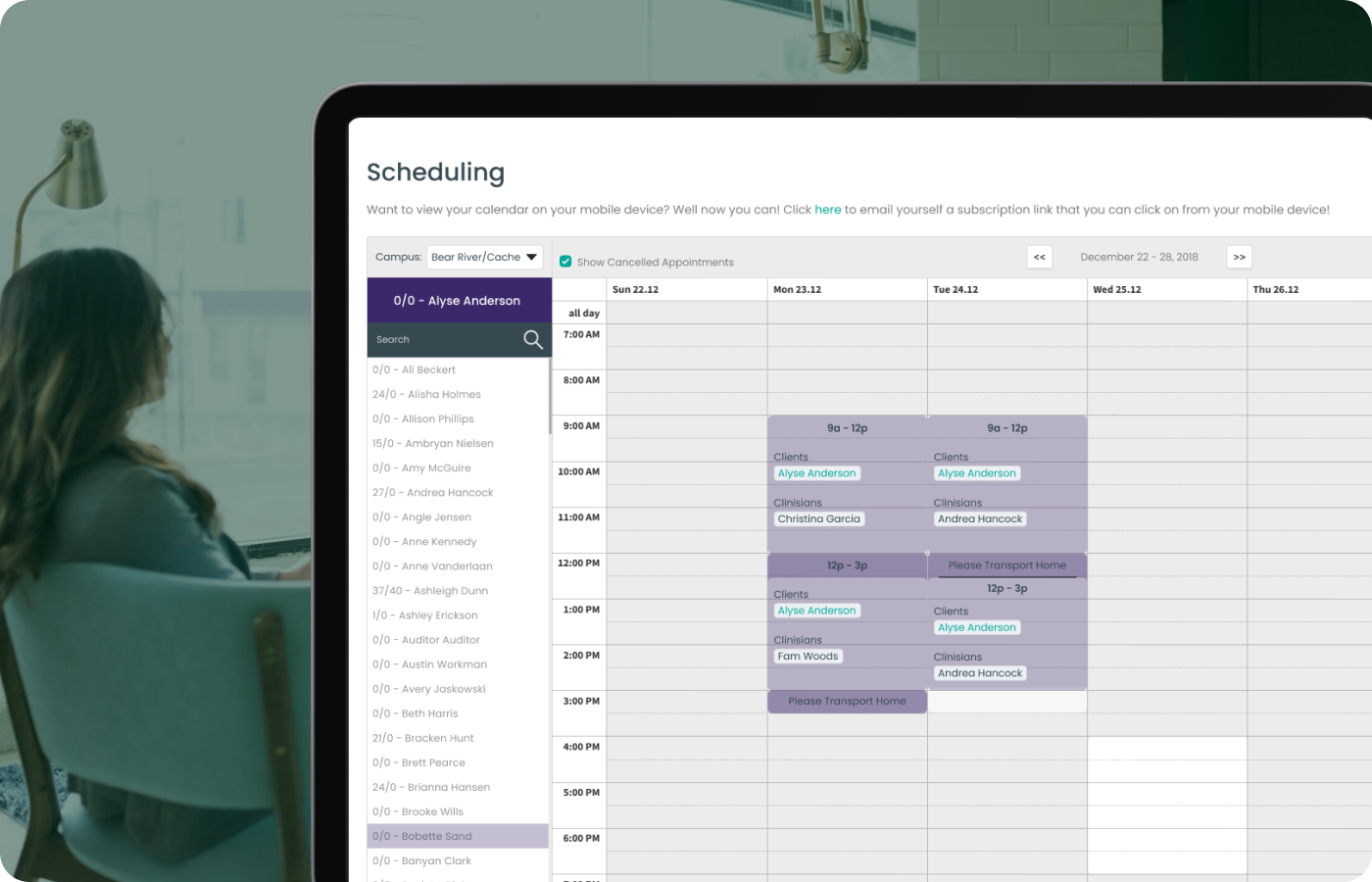
    Mental Health Clinic Software Case Study | TwinCore

    Our team successfully supported and enhanced a custom software solution for a US-based mental health clinic, focusing on improving operational efficiency, treatment tracking, and reporting capabilities. Designed for healthcare professionals, the platform streamlines the management of Electronic Health Records (EHR) and Electronic Medical Records (EMR) while adhering to strict HIPAA regulations.

    45% faster data loading and processing
    60% faster team collaboration and coordination

How our agentic workflow works

The largest gains from AI-assisted coding come from implementation tasks that are already specified, not from architecture or judgment. In a controlled GitHub study, developers using GitHub Copilot completed one defined coding task 55% faster (1h11m versus 2h41m). Repetitive, clearly scoped work is where that speed shows up, while human judgment is still needed for complex problems and bugs. Our workflow applies AI agents where they add measurable value while keeping judgment-intensive work human-led.

A strong agentic process does not start when a developer opens Claude Code. It starts with prepared requirements, written rules, repository context files, coding standards, and quality gates. Steps 1 through 3 establish this foundation before AI-assisted implementation begins.

We keep changesets small and the review gate mandatory for a reason. DORA's 2025 research describes AI as an amplifier. It strengthens effective engineering practices, and it magnifies weak testing, poor feedback loops, and unstable delivery processes just as readily. Our workflow combines small changesets, automated testing, and mandatory human review to keep those risks under control.

Senior engineer reviewing an AI-assisted change before it merges

1/8

  • 1

    Discovery and requirements

    Before any agent touches the codebase, we turn the request into written, testable requirements: user flows, acceptance criteria, data contracts, and the edge cases that matter. Ambiguous requirements are a major source of incorrect or incomplete AI output, so we resolve them with your team first.

  • 2

    Architecture and constraints (human-led)

    Senior engineers define the system architecture, data models, technology choices, and the constraints the implementation must respect. AI agents do not make architectural decisions. This remains fully human-led.

  • 3

    Repository and AI context setup

    We prepare the repository so agents work within the context of your actual codebase rather than relying on generic defaults: context files describing the domain and module layout, your coding standards written down as rules, reference examples of "good" code in this codebase, and guardrails that define what an agent is not permitted to change.

  • 4

    AI-assisted implementation

    Developers direct AI coding agents such as Claude Code to build specified units of work, including components, endpoints, data layers, and tests. At this stage, agentic coding remains within the boundaries defined in Steps 1 through 3, and changesets stay small and scoped to one requirement each.

  • 5

    Automated validation

    Every change passes automated quality gates before human review: the build process, unit and integration tests, static analysis, linting, security scanning, and CI coverage thresholds. Any change that fails these checks is returned for correction, so reviewers spend their attention on design rather than on mechanical defects.

  • 6

    Human code review

    A senior engineer reviews every AI-generated change that passes the gates. The review covers correctness, security, performance, and whether the change fits the architecture defined in Step 2.

  • 7

    QA and release

    QA engineers validate against the requirements from Step 1 and against real edge cases, then the change ships through your normal release process with the same rollback path as any other code.

  • 8

    Measurement and continuous improvement

    We track cycle time, review findings, escaped defects, and cases where AI-assisted changes required rework. Those findings feed back into the context files and rules from Step 3, so the process becomes more reliable within your codebase over time.

Where agentic development works best

Not every task benefits from an AI coding agent, and treating every task as a good fit for AI can accelerate the wrong work. We split the work explicitly.

The distinction is how clearly the task and expected outcome have already been defined. When the expected result is clearly specified and verifiable, an agent can complete the work faster. When the task is deciding what the target should be, or when a wrong decision could cause a security incident or data corruption, the work remains directly owned by a senior engineer.

Strong fit for AI agents Human-heavy work
Boilerplate and scaffolding Architecture
Isolated features with clear boundaries Ambiguous business requirements
API connectors Complex distributed workflows
Migrations Security-critical logic
Test generation Concurrency and performance trade-offs
Documentation Production incident decisions
Repetitive refactoring

How we measure the result

"Faster development" means little without measurable evidence. We agree on the metrics with you before the first sprint, establish a baseline using your current delivery performance, and report on those metrics at the same cadence as your sprint reviews. That turns the claim into a delivery model you can manage, and it gives you the evidence to stop or expand the engagement.

Lead time for changes and change failure rate are two of the four DORA delivery metrics, so if your team already tracks them, we baseline against your existing numbers instead of inventing a scorecard.

Engineers reviewing delivery metrics on a dashboard

Speed

  • Lead time for changes. Time from first commit to running in production.
  • PR cycle time. Time from pull request opened to merged.
  • Review time. How long a change waits on a reviewer, which shows whether the review gate has become the bottleneck.

Quality

Cost and predictability

Benefits of agentic development services

The four business outcomes of an AI-augmented delivery process.

Team reviewing faster delivery cycles on a dashboard

1/4

  • Faster delivery

    Well-defined implementation tasks can often be completed in hours rather than days. That frees engineers to spend their time on architecture, edge cases, and business logic instead of boilerplate.

  • Lower cost without compromising quality

    Higher engineering throughput means you get more delivered work per dollar. The same review standards and quality controls remain in place, so the savings come from higher throughput rather than from cutting corners.

  • Consistent code quality

    Agents apply your coding standards and patterns the same way across a large codebase. This reduces inconsistencies that can emerge when multiple developers work on the same codebase over time.

  • Faster iteration on feedback

    Because implementation is AI-assisted, fixes and changes are delivered sooner within each sprint. Demos, stakeholder feedback, and the next iteration happen in tighter cycles.

What we build with agentic development

Where AI-assisted implementation applies across a build.

Custom software development

Full product builds, from MVP to enterprise platform, with AI-assisted implementation across the stack. For AI-first product builds, see our AI MVP Development page.

Legacy modernization

Feature development on existing products

API and system integrations

Test coverage and QA automation

Code audits and technical debt cleanup

Tools and tech stack

The AI coding agents and the engineering stack they run alongside. Our engineers select the appropriate AI tool based on the task, codebase, security requirements, and project constraints.

  • Claude Code
  • GitHub Copilot
  • Cursor
  • custom internal AI tooling
  • .NET
  • ASP.NET Core
  • React
  • Angular
  • Blazor
  • Azure
  • AWS
  • CI/CD pipelines with automated quality and security gates
NOT mean

What agentic development does NOT mean

Senior engineer reviewing an agent-generated pull request

Agentic development raises legitimate concerns.

Senior engineer reviewing an agent-generated pull request

Here is how our process addresses them:

  • AI does not make architecture decisions Senior engineers own system design, technology choices, and technical trade-offs.

  • AI-generated code does not ship without human review Every change goes through code review by a senior developer before merge. This matters for security. In Veracode's 2025 benchmark of 80 coding tasks across four programming languages and four vulnerability categories, only 55% of generated outputs passed its security checks. This is why AI-generated code must pass human review, automated security analysis, and project-specific testing before merge.

  • You do not get a "black box" codebase The code stays readable, documented, and maintainable by your internal team or another qualified engineering partner.

  • Security and compliance reviews remain mandatory Agentic workflows carry the same security review and testing discipline as traditional development.

  • You still own everything The code, the architecture, and the IP are yours. The AI tooling supports our delivery process; it does not become a dependency in your final system.

How we protect your code and data

Running AI agents against your codebase raises a second set of questions beyond code quality: where does the code go, what enters a prompt, and who can see it. These controls are agreed with you before the engagement starts and documented in the project's security and delivery requirements.


  • Only client-approved AI tools

    We agree the tool list with you before the engagement starts, and we do not add tools to your project without your sign-off.

  • No credentials or production data in prompts

    Secrets, keys, and live customer data stay out of agent context. Agents work against test fixtures and anonymized data.

  • Controlled repository access

    AI tools operate within the repository, branch, and environment permissions approved for the assigned engineers.

  • Approved vendor configurations

    We use approved commercial or enterprise configurations designed to prevent client code from being used for model training, subject to the selected vendor's terms and privacy settings.

  • Defined rules for proprietary code

    Before work starts, we agree which parts of the codebase agents may read, which they may modify, and which are off-limits entirely.

  • Your veto on any tool

    If you want a specific AI tool excluded from your project, we exclude it and staff the work accordingly.

  • Full traceability in Git

    Every AI-assisted change lands through the normal commit and pull request history, so you can audit what changed, when, and who reviewed it.

Agentic development team engagement models

Three ways to bring an agentic team onto your work.

Dedicated agentic team

A full team of engineers, QA, and an architect uses agentic workflows to build your product from discovery to launch.

Team augmentation

Project-based delivery

Industries we serve

Engineers pairing the agentic workflow with domain expertise

Agentic development works across any domain, since the benefits of speed and consistency apply across industries. Our teams pair this workflow with deep domain expertise in logistics, fintech, and enterprise software.

Engineers pairing the agentic workflow with domain expertise

1/5

  • Logistics and transportation

    Our teams pair the agentic workflow with deep logistics and transportation domain expertise.

  • Fintech

    Our teams pair the agentic workflow with deep fintech domain expertise.

  • Healthcare

    The speed and consistency benefits of agentic development apply here just as they do across every other domain we serve.

  • E-commerce

    The speed and consistency benefits of agentic development apply here just as they do across every other domain we serve.

  • Enterprise operations

    Our teams pair the agentic workflow with deep enterprise software domain expertise.

Ready to build faster without compromising quality?

Start with an agentic delivery assessment. It is a focused assessment of your actual codebase and delivery process, and it produces three things:

  • A comparison of your current workflow against an agentic one, using your own delivery numbers as the baseline.
  • A map of AI-acceleration opportunities in your codebase, ranked by payoff and by risk, with the human-heavy areas marked as out of scope.
  • A controlled pilot proposal. A fixed-scope pilot covering one module or migration, with success metrics defined up front so you can evaluate the results objectively.

If the assessment says agentic development is the wrong fit for your codebase, we will tell you, and the assessment findings will remain yours.

Latest Insights

Frequently Asked Questions