LinkedIn
 Twitter
 Facebook
 Youtube



Illinois ranks fifth in the United States for net tech employment, with roughly 350,000 tech workers concentrated around Chicago. Demand for custom software development in Illinois comes mainly from logistics tech, fintech, healthtech, and enterprise platforms. What sets the local market apart from the coasts is the kind of business doing the buying. A lot of Illinois companies run operations that off-the-shelf SaaS was never really built for: freight networks juggling dozens of carriers, regional banks and credit unions with their own compliance overhead, hospital groups spread across multiple sites.
So there's steady work for custom software shops in Chicago and the rest of the state. What clients usually need is software that plugs into the ERP they already have, fits how their team actually works day to day, and can grow without becoming a bottleneck two years in.
Below is a rundown of the top custom software firms working in Illinois right now, covering everything from logistics platforms to broader enterprise builds. For each one I've tried to be specific about what they actually ship, which industries they know well, and the kinds of projects where they're a sensible call.
What to Look for in a Custom Software Development Partner
Picking a development vendor based on hourly rate or portfolio aesthetics tends to produce the wrong result. The more reliable filter is domain relevance — does this firm understand how your industry actually operates?
A few criteria worth evaluating before shortlisting:
Real industry depth
A vendor that lists twelve verticals on their homepage hasn’t specialized in any of them. Look for repeated work within your domain: case studies, technical patterns, named integrations.
How they’ve actually integrated
Custom software almost always touches existing systems: ERP, WMS, CRM, carrier APIs. Ask which specific platforms they’ve connected to before and how they handled data migration on those projects.
How they explain architecture decisions
A credible partner can walk through a stack or data-model choice in plain language. If you can’t get a clear answer on why they picked something, that itself is a signal.
Delivery model fit
Dedicated team versus project-based engagement has real implications for speed and ownership continuity. Neither is wrong. The fit matters for your project type.
What happens after go-live
Enterprise software keeps changing for years after launch. Understand what support structure exists and how change requests get handled.
The core question: does this team understand your operational logic, or do they need six weeks just to learn the terminology?
Top 9 Custom Software Development Companies in Illinois
- TwinCore
- Thoughtworks
- Simpalm
- Azumo
- Itexus
- Vention
- 8th Light
- Rightpoint
- VisualFizz
1. TwinCore
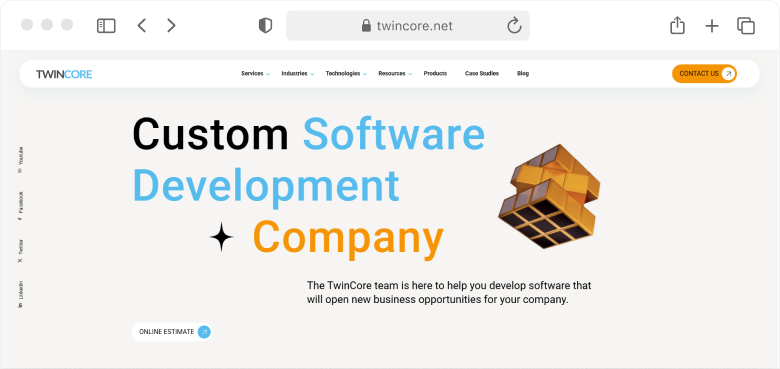
TwinCore is a Chicago-based custom software development firm specializing in logistics technology, fintech, healthcare, and enterprise operations. The company operates from 2315 W Chicago Ave and has delivered 100+ projects across supply chain platforms, financial systems, and enterprise automation.
The firm’s clearest differentiator is logistics tech depth. TwinCore maintains what it calls the TwinCore Logistics Framework — a modular architecture with production-ready components for dispatch, fleet management, rate engine, order management, and supply chain visibility. This matters because logistics software carries a high domain complexity floor: carrier API integrations, multi-modal routing logic, freight audit workflows, and real-time tracking data require domain experience that generalist teams can’t absorb mid-project.
Core technical capabilities include .NET / ASP.NET, React, Angular, Blazor, Azure, AWS, and IoT integrations. The team covers full-cycle development — from backend architecture through UI — across TMS and logistics platform builds, ERP/WMS/CRM integrations, AI-powered automation, and legacy system modernization.
Project types where TwinCore is most directly relevant:
- Transportation management systems with carrier integrations and a configurable rate engine
- Fleet management and route optimization platforms
- Last-mile delivery and supply chain visibility tools
- Enterprise workflow automation with ERP and WMS connectivity
- Fintech platforms requiring compliance-grade architecture
The team of 30+ includes developers, architects, and domain specialists. TwinCore has a verified Clutch profile with client reviews. For Illinois businesses in logistics, distribution, or enterprise operations, TwinCore brings domain knowledge that a generalist team would need months to build up on the client’s budget.
2. Thoughtworks
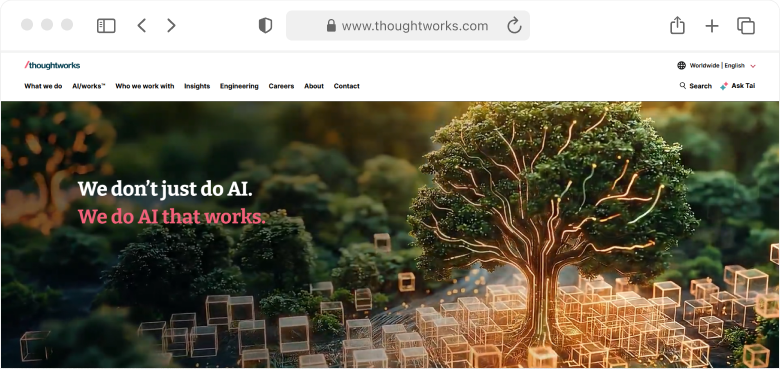
Thoughtworks was founded in Chicago in 1993 and remains the most globally recognized custom software consultancy with Chicago roots. The firm is publicly traded on NASDAQ and operates 47 offices across 18 countries with 10,000+ engineers and consultants.
The Chicago heritage matters less than the engineering reputation. Thoughtworks is the firm most often cited in technical literature on continuous delivery, microservices, and evolutionary architecture — its engineers wrote several of the books that shaped how the industry talks about those topics. For enterprise buyers, the practical implication is that engagements are expensive but the engineering practices are usually well above the industry baseline.
- Core services: custom software development, legacy and mainframe modernization, AI / GenAI delivery, platform engineering, data and analytics
- Stack focus: AWS, Azure, Google Cloud; Databricks, Snowflake; Backstage by Spotify; broad polyglot delivery (Java, JavaScript / TypeScript, Python, Ruby in historical practice — current site lists cloud and data partners rather than specific languages)
- Engagement model: project-based delivery, managed services, multi-year transformation programs; named 8-week delivery cycles on enterprise engagements
- Best fit: Fortune 500 and large enterprise clients running multi-year modernization, AI rollout, or platform engineering programs — not the right match for fixed-budget mid-market builds
3. Simpalm
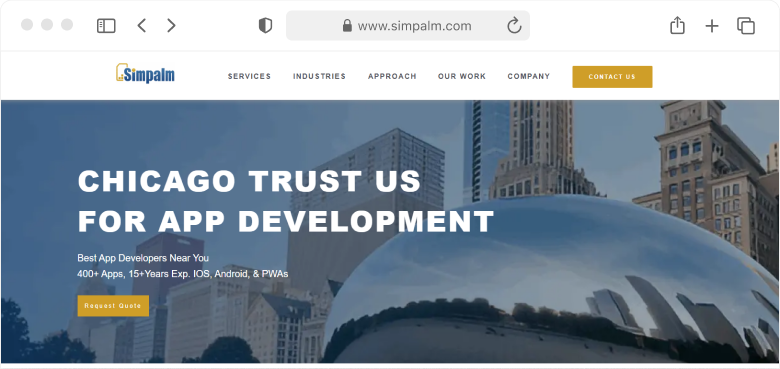
Simpalm is a Chicago-based software development firm focused on mobile and web application development for startups, growing businesses, and enterprise clients. The company has maintained a Chicago presence for over a decade with a consistent Clutch review history.
- Core services: iOS and Android development, React Native cross-platform, web apps and PWAs, UI/UX design, MVP development, AI services (chatbots, automation, agentic AI)
- Stack focus: React, React Native, Node.js, Python, WordPress; AWS and Azure
- Engagement model: dedicated team and project-based delivery; IT staffing for extended capacity
- Best fit: startups, nonprofits, and mid-market product teams shipping customer-facing mobile and web products
4. Azumo
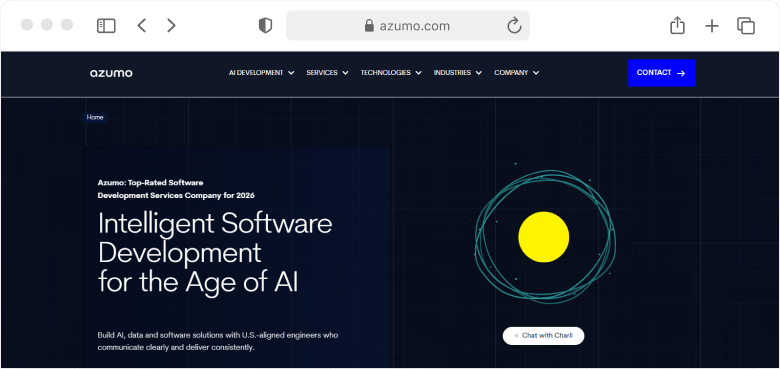
Azumo is a Chicago-based nearshore software development company that places dedicated engineering teams with technology-driven organizations. The model targets companies expanding capacity faster than internal hiring allows.
- Core services: custom application development, cloud infrastructure, DevOps automation, product engineering
- Stack focus: AWS, GCP, Azure; microservices and containerized deployments
- Engagement model: nearshore teams embedded as extended engineering capacity
- Best fit: fast-scaling startups and enterprise teams with their own product direction
5. Itexus
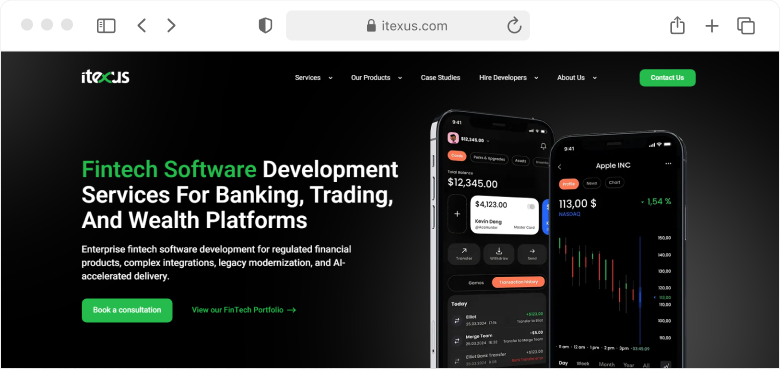
Itexus is a custom software development firm with recognized depth in financial technology. The company builds secure, compliance-grade digital systems for organizations in banking, investment management, insurance, and financial services.
- Core services: fintech platform development, mobile banking, digital lending, trading and wealth-management systems, payments, insurance systems, AI integration, project audit and rescue
- Stack focus: .NET Core, Node.js, Python / Django, React, Angular, Swift, Kotlin; Azure; Kubernetes
- Engagement model: project-based and staff augmentation with embedded teams
- Best fit: banks, regulated fintech startups, lending and insurance firms operating under ISO, GDPR, or HIPAA constraints
6. Vention
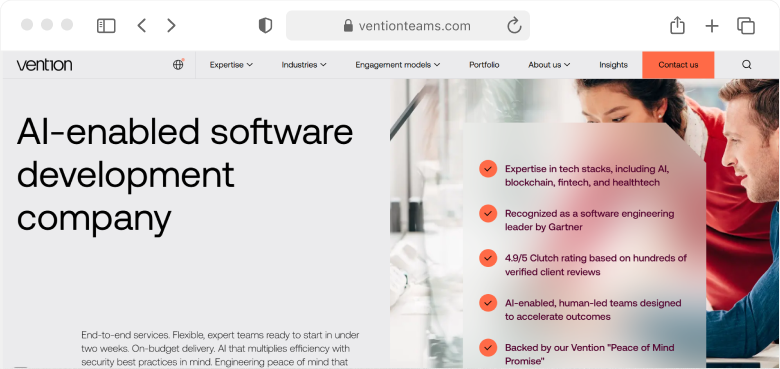
Vention places dedicated engineering teams into client organizations that are building digital products or scaling SaaS platforms — covering custom development, SaaS engineering, cloud architecture, QA, and product work across fintech, healthtech, e-commerce, and enterprise software. Team size scales with project phase. The relevant case is when product leadership already exists inside the client and what’s missing is execution capacity working to that roadmap.
- Core services: custom software, web and mobile development, QA, DevOps, cloud consulting, cybersecurity, AI/ML, blockchain
- Stack focus: Java, .NET, Node.js, React, Python, Go; AWS, Azure, Google Cloud
- Engagement model: dedicated teams, project-based outsourcing, staff augmentation; product discovery workshops
- Best fit: SaaS companies and enterprise product teams from startup through Fortune 500; average engagement around 36 months per Vention's own reporting
7. 8th Light
8th Light is a Chicago-based software consultancy known for craftsmanship-oriented custom development and a long-standing presence in the Midwest engineering community. The firm works with enterprise clients and mid-market companies on systems where code quality, test coverage, and long-term maintainability carry as much weight as initial delivery speed.
- Core services: custom software development, agentic AI product development, platform rebuilds, legacy modernization, technical coaching
- Stack focus: Ruby, JavaScript / TypeScript, Java; AWS; LangChain, Databricks, Fastly listed on current site
- Engagement model: paired engineers embedded inside the client team; 8–12 week agentic AI studio engagements alongside long-cycle delivery
- Best fit: mid-market and enterprise clients in retail, higher education, real estate, and regulated operations (named on site: Grubhub, Pfizer, Ticketmaster, Cars.com)
8. Rightpoint
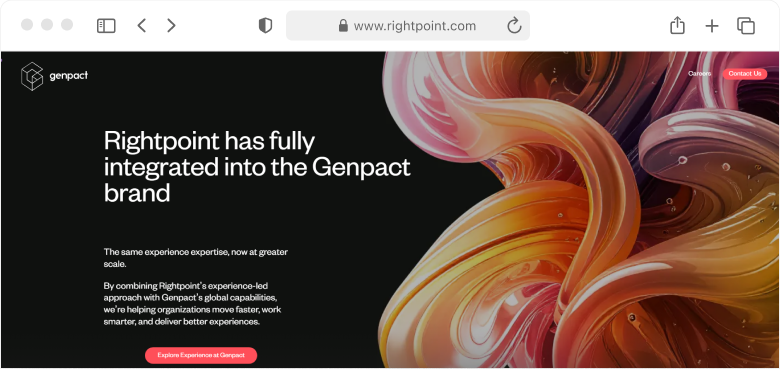
Rightpoint is a Chicago-headquartered digital consultancy that builds custom platforms, customer experience systems, and enterprise digital products for mid-market and Fortune 500 clients. The firm spans strategy, design, and engineering disciplines under one roof.
- Core services: customer experience platforms, omnichannel and commerce engineering, intelligent content systems, personalization and experimentation, digital workspace, experience advisory
- Stack focus: Microsoft (Azure, .NET, Power Platform), Adobe, Salesforce, Sitecore, Optimizely
- Engagement model: multi-stream enterprise programs combining strategy, design, and engineering teams
- Best fit: mid-market and Fortune 500 clients across manufacturing, financial services, healthcare, retail, and professional services
9. VisualFizz
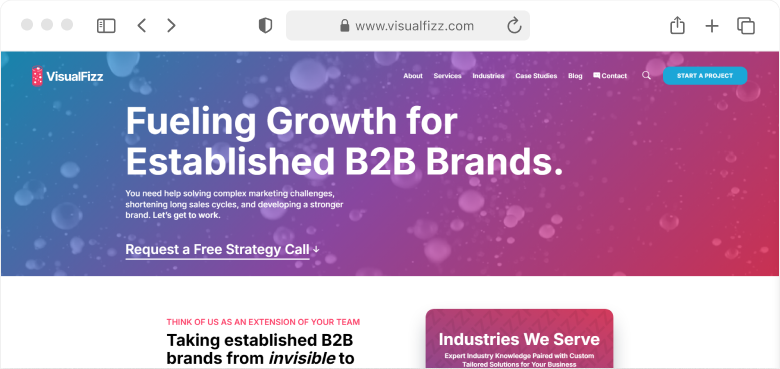
VisualFizz is a Chicago-based digital agency that combines web platform development with marketing technology and analytics. The company builds platforms that connect technical infrastructure with customer-facing experience — web properties, marketing automation systems, and engagement tools.
- Core services: web platform development, branding and creative, paid media and SEO, content marketing, CRM and marketing-automation integration
- Stack focus: not publicly listed; deliveries center on web platforms paired with marketing automation, CRM, and analytics tooling
- Engagement model: project-based delivery with long-term retainer / partnership component
- Best fit: mid-to-large B2B brands in technology / SaaS, manufacturing, construction, real estate, cannabis, and nonprofits
How to Choose the Right Partner for Your Project
Before engaging any of the software development partners in Chicago or elsewhere in Illinois, these questions surface the information that matters:
- Do you have case studies from our specific industry? Ask for concrete examples, not a list of verticals.
- Which ERP, WMS, or CRM systems have you integrated? Names, not categories.
- What does your discovery process look like? A firm with no structured discovery phase will spend the first six weeks figuring out what to build.
- Who will be the technical lead on our project? Ask about their background and domain experience directly.
- How do you handle scope changes mid-project? This will happen — understand the mechanism before it does.
- What does post-launch support look like? Response times, change request handling, SLA structure.
- How do you approach architecture decisions? Can they explain the tradeoffs without defaulting to buzzwords?
A vendor who answers these directly has done this before. Vague answers to specific technical questions are a reliable signal in the other direction.
Why Illinois Businesses Choose Custom Over Off-the-Shelf
The case for custom software is clearest in operational environments where the business process doesn’t fit a standard workflow. Illinois has a high concentration of exactly those businesses: regional logistics networks with non-standard carrier mixes, mid-market manufacturers with legacy ERP systems, financial services firms under state and federal compliance requirements.
Off-the-shelf tools serve the median use case. When your operation deviates from that median — or when the cost of bending your process to fit a SaaS product exceeds the cost of building something specific — custom development becomes the economical choice.
The other driver is integration depth. Enterprise operations in Illinois typically run five to ten connected systems. A platform built to sit in that environment, move data between those systems, and surface the right information to the right people outperforms a generic tool with bolt-on integrations.
Conclusion
The Chicago custom software market has capable firms at every tier. Most can build comparable infrastructure. The real spread is in domain knowledge: which industries each has actually shipped systems in, and how much architectural judgment they bring versus how much pure execution.
A quick match by project shape:
- Logistics, distribution, complex ERP/WMS integration: TwinCore
- Fintech and regulated financial systems: Itexus
- Mobile-first consumer apps and portals: Simpalm
- Enterprise Microsoft / commerce programs: Rightpoint
- Code quality on long-running engagements, internal handoff planned: 8th Light
- Extending an in-house engineering team with cloud-native capacity: Azumo or Vention
- Web platforms paired with marketing analytics: VisualFizz
Pick the firm that has already shipped something close to what you need. That decision typically outweighs hourly rate.