30+
professionals
100+
success projects
1 week
trial offer
Clutch rating

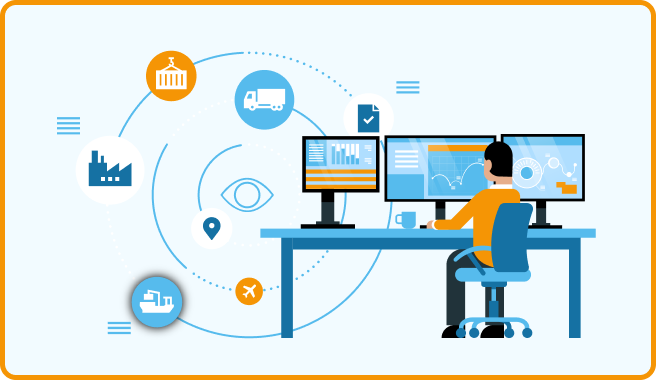
TwinCore designs Supply Chain Visibility and Control Tower solutions for organizations that need a consistent, reliable view of how their supply chain is performing in real time — and the ability to act when it does not.

These solutions bring together data from ERP, TMS, WMS, carriers, 3PLs, and external sources into a unified operational picture. Beyond visibility, they support structured exception handling, decision-making, and coordinated action across teams and systems.

Contact us

When You Have Visibility, but No One Owns the Outcome

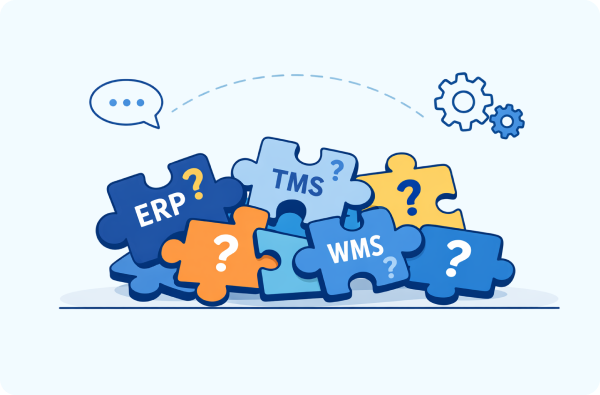
Many organizations already have access to large amounts of supply chain data. The challenge is not data availability, but fragmentation.

Information is spread across systems. Statuses are interpreted differently by different teams. Risks are discovered late. Alerts arrive without context. Exceptions are handled through calls, messages, and spreadsheets, without ownership or traceability.

As a result, teams operate reactively. Decisions are delayed. Customer communication depends on manual investigation. The same issues repeat because the underlying process never changes.

What a Control Tower enables in practice

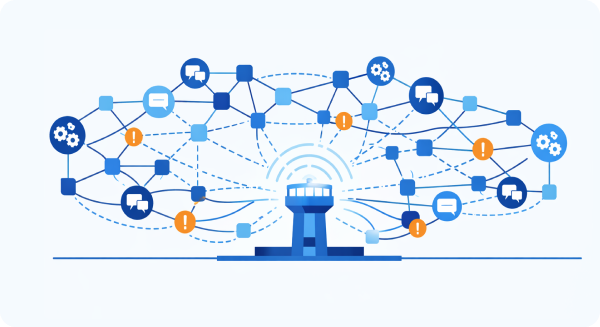
A Control Tower is not a dashboard. It is an operational capability. Visibility answers what is happening.

A Control Tower adds understanding, responsibility, and execution. It provides a single, shared view of orders, shipments, milestones, and inventory. It highlights what matters now, explains why it matters, assigns ownership, and supports coordinated response across supply chain, transportation, planning, and customer-facing teams.

What we build as the Control Tower core

Unified Visibility Across Orders, Shipments, Milestones, and Inventory

We create a consistent operational picture that connects orders and purchase orders to shipments, milestones, and inventory positions.

Events from different systems are aligned so teams see the same status at the same time, understand where responsibility changes hands, and know exactly where execution stands.

Event Normalization and Status Consistency Across ERP/TMS/WMS/3PLs

Data from different partners rarely speaks the same language.

We normalize events and statuses from ERP, TMS, WMS, carriers, and 3PLs into a single model. This removes ambiguity, enables comparison, and allows teams to manage exceptions without translating formats or interpretations manually.

Predictive Visibility and Early Risk Signals (Before Failures Hit)

Control depends on timing.

The Control Tower highlights risks before they become failures. Delays, processing slowdowns, ETA drift, and inventory impact surfaced early, giving teams time to respond while options still exist.

Structured Exception Queue With Priority, Context, and Ownership

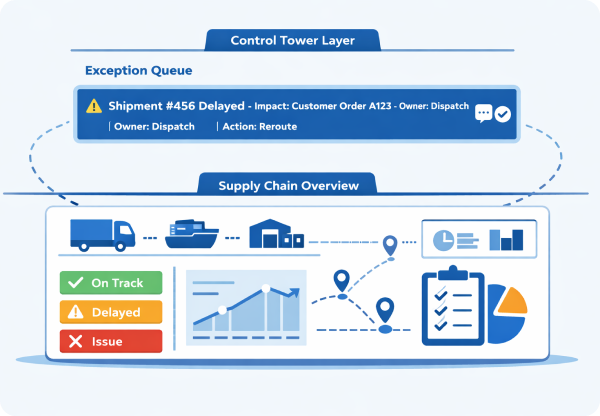
Instead of hundreds of disconnected alerts, teams work with a controlled exception queue.

Each exception includes context, business impact, priority, and ownership. Teams know what happened, who is affected, and what action is expected. This replaces ad-hoc escalation with a repeatable operational process.

Decision Support With Customer and Inventory Impact

Supply chain decisions affect more than one function.

The Control Tower shows downstream impact: which customers are affected, which orders are at risk, and what alternatives exist. Teams can evaluate options such as rerouting, expediting, reallocating inventory, or adjusting commitments based on actual consequences.

Orchestration Workflows That Turn Decisions Into Actions

Decisions must turn into action.

We implement workflows that assign responsibility, track progress, support escalation, and record outcomes. Where needed, actions are synchronized back into execution systems such as TMS, WMS, or ERP so the operational state remains aligned.

Systems and data sources we connect

The Control Tower works with the systems you already rely on.

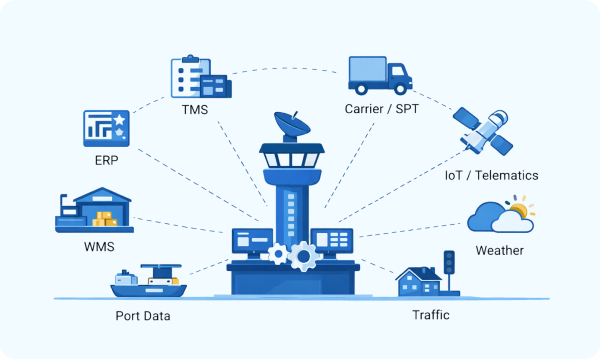
We integrate internal platforms and external partners to remove duplication and manual reconciliation, including ERP for orders and inventory, TMS for shipments and milestones, WMS for inbound and outbound activity, carrier and 3PL feeds for tracking and appointments, and IoT or telematics data where condition or location signals matter.

External context such as weather, port congestion, or traffic data can be included when relevant to decision-making.

Governance, Access, and Auditability Teams Can Trust

Control requires accountability.

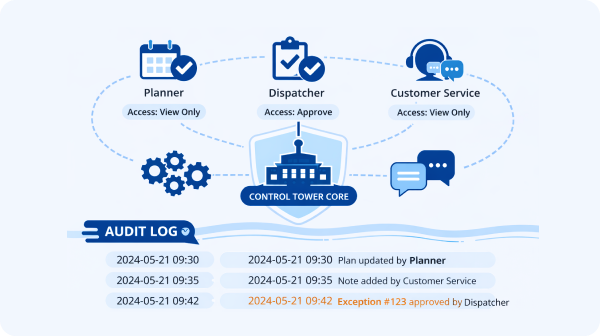
We design access models, audit trails, and change tracking so teams understand who can act, who approved what, and when decisions were made. This is essential in multi-party environments where responsibility must be clear and defensible.

How Teams Use the Control Tower

Different teams see the same reality from different perspectives. Transportation focuses on shipments and milestones. Planning sees impact on inventory and production. Customer-facing teams access a clear history of events to support proactive communication. Leadership gains confidence that issues are being handled systematically, not reactively.

All teams operate from a shared operational picture.

Transportation

milestones, delays, carrier performance

Planning

inventory impact and availability risks

Customer teams

proactive updates with clear history

Leadership

confidence that issues are handled systematically

Phased Implementation Without Disrupting Daily Execution

Control Towers are introduced incrementally.

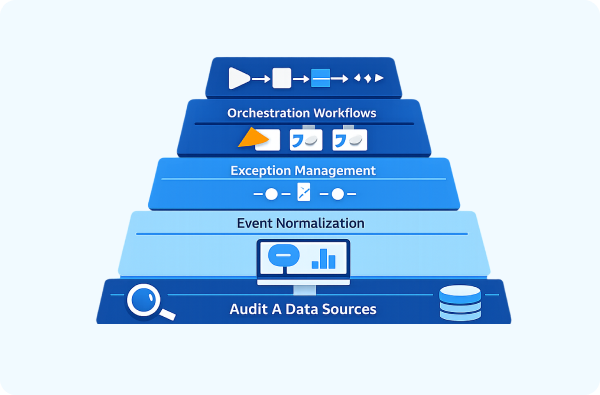
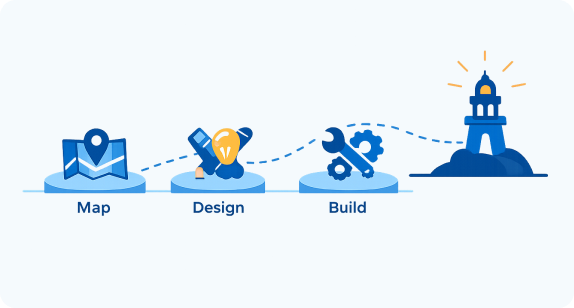
We start with a focused audit of processes and data sources. A minimal visibility layer is established first. Event normalization follows. Exception management is added once signals are reliable. Orchestration workflows are introduced last, when teams are ready to act consistently.

This phased approach reduces risk, builds trust in the data, and allows the Control Tower to grow alongside operational maturity.

Why TwinCore takes this approach

In complex supply chains, visibility only becomes valuable when it is connected to responsibility and action.

As operations scale, decisions are rarely made by a single team or within a single system. Information moves across planning, transportation, inventory, customer service, and external partners. In this environment, systems that stop at representation inevitably create gaps between what is seen and what is done.

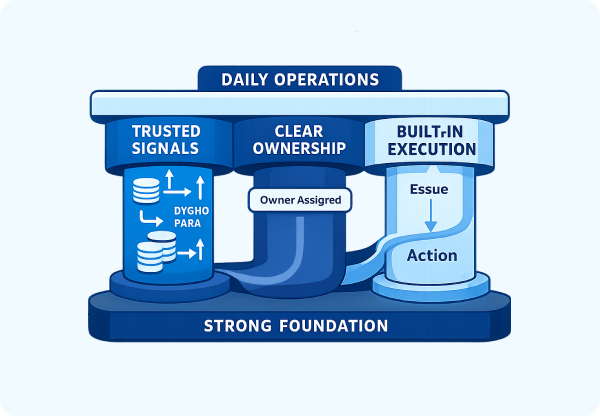
TwinCore approaches Control Towers as part of daily operations rather than as an analytical layer. Signals are structured so they can be trusted, ownership is clear so decisions do not stall, and execution is built into the same flow where issues are identified. This allows teams to respond consistently, even when conditions change and pressure increases.

Over time, this approach proves resilient. It does not rely on ideal data, perfect handoffs, or static processes. It continues to support decision-making as complexity grows, partners change, and supply chains behave less predictably.

Technology foundation

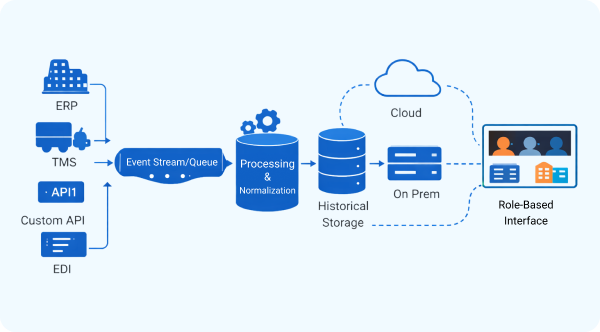
Solutions can be deployed in cloud or on-prem environments.

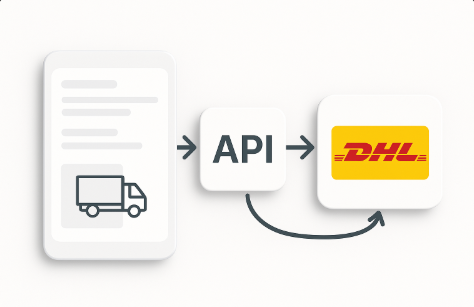
The architecture is integration-first and event-driven, using APIs or EDI where appropriate. Events and milestones are processed through queues or streams, stored with full history, and surfaced through role-based interfaces. Monitoring, logging, and alerting are included to ensure reliability over time.

Where this approach becomes necessary

This approach becomes critical in environments where multiple partners, handoffs, and service commitments interact daily.

As supply chains scale across regions, suppliers, carriers, and customers, small execution issues quickly affect service, cost, and trust. In these conditions, structured visibility and controlled response are not optimization tools — they are operational requirements.

Related logistics services


Normalize partner, carrier, ERP, and WMS feeds into a consistent event layer.

Build reporting that stays consistent across Ops and Finance once the model is unified.

Add real-world signals (condition, location, security events) when they change operational decisions.

Delivery and collaboration models

Work can be delivered as a focused initiative with a defined scope, a flexible rollout that evolves during validation, or a dedicated team model for organizations building long-term supply chain capabilities.

Сontact us

What our clients say about us

  • TwinCore has elevated the client's customers to the next level of supply chain management. The team is highly cost-efficient from a project management standpoint, and internal stakeholders are particularly impressed with the service provider's team dynamic.

    Alex Lopatkin
    Alex Lopatkin
    Amous
  • TwinCore delivered a fully functional solution on time, meeting expectations. The highly organized team employed a DevOps approach, swiftly responded to needs and concerns, and led a productive, enjoyable workflow. Their receptiveness to client requests and feedback stood out.

    Bruno Maurer
    Bruno Maurer
    Managin Director, N-tree
  • Thanks to TwinCore’s work, the client has gained a user-friendly, stable, and scalable SaaS platform. The team manages the engagement well by being reliable and punctual; they deliver tasks on time. Their resources are also highly flexible, resulting in a truly seamless engagement with the client.

    Mischa Herbrand
    Mischa Herbrand
    Executive, CIN
  • TwinCore successfully audited the apps and converted them into modern web apps, meeting expectations. They completed the project on time and within the agreed budget. Communicating through virtual meetings, the team provided updates and responded to the client's concerns.

    JH
    Joe Holme
    IT Director, GDD Associates
  • TwinCore delivered a fully functional solution on time, meeting expectations. The highly organized team employed a DevOps approach, swiftly responded to needs and concerns, and led a productive, enjoyable workflow. Their receptiveness to client requests and feedback stood out.

    A
    Anonymous
    Managing Director, Marketing Company

Related Topics

Frequently Asked Questions


How is a Control Tower different from a visibility dashboard?

A visibility dashboard answers what is happening. A Control Tower adds operational structure around that information: consistent event definitions, business context, ownership, and a controlled way to manage exceptions and decisions. The emphasis shifts from observing status to coordinating response, tracking actions, and keeping execution aligned across teams and systems.


Which systems should we integrate first: ERP or TMS/WMS?

It depends on where the biggest operational uncertainty sits. If execution visibility is the priority, TMS and WMS are usually the first sources because they provide shipment milestones, warehouse events, and handoffs. If commitment management and inventory or order truth is the priority, ERP needs to be included early. In many implementations, we start with a minimal set from both sides so control decisions are operationally accurate and commercially defensible.


How do you unify statuses and events from different partners and carriers?

Partners and carriers report events in different formats and with different semantics. We normalize these inputs into a unified event and status model that reflects your operational view rather than each partner’s terminology. This includes mapping rules, validation, and conflict handling so teams see consistent states even when sources are incomplete or inconsistent.


What does exception management look like in practice (priority, ownership, action history)?

Exceptions are managed through a structured queue rather than scattered alerts. Each exception is created with context, impact, priority, and an assigned owner. Actions are tracked as part of the workflow, including timestamps, comments, changes in status, and escalation steps. This builds a reliable history of what happened, who responded, and how the issue was resolved.


Can we roll this out in phases across countries, regions, or business units?

Yes. Control Towers are commonly delivered in phased rollout because operational maturity and data availability vary across regions. We typically start with one lane, region, or business unit to validate the event model, exception workflows, and adoption patterns, then expand coverage in a controlled way without disrupting global operations.


Where is the solution hosted: cloud or on-prem?

Both deployment models are supported. Hosting depends on security, data residency, and connectivity requirements. The architecture is designed to keep integrations reliable and observable in either environment.


How do you handle security, roles, and audit trail?

Access is managed through role-based permissions aligned to operational responsibilities, with optional restrictions by region, client, product line, or business unit. Audit trails capture critical changes and actions, including status updates, exception handling, approvals where applicable, and configuration changes. This supports accountability, compliance, and dispute readiness.


What does post-release support and integration change control look like?

Support includes monitoring, logging, and alerting across integrations and event pipelines so issues are detected early and traced to clear causes. Change control covers partner API updates, event format changes, authentication updates, and system upgrades. Updates are tested and rolled out in a controlled way to prevent silent failures that undermine visibility and trust.


Scroll to top