30+
professionals
100+
success projects
1 week
trial offer
Clutch rating

Routing shouldn’t depend on spreadsheets, tribal knowledge, or whatever limits your current SaaS planner comes with. When you run dozens or hundreds of daily stops, mixed fleets, strict delivery windows, and constant exceptions, generic route tools stop being “helpful” and start being a bottleneck.

We build custom route optimization software that matches how your operation actually runs: your constraints, your priorities, your depot rules, your real-world mess. The result is routing your dispatch team can trust, scale, and adjust in real time.

Contact us

Core Capabilities

Constraint-Aware Optimization Engine

Routes are optimized around your actual rules, not generic presets: time windows, service times, vehicle limits, driver qualifications, and customer priorities. Supports the same core constraint set used in real VRP problems (capacity + time windows), without oversimplifying operations.

Multi-Depot and High-Stop Routing at Scale

Designed for dense daily routing: multiple depots, large stop volumes, recurring routes, and variable service requirements. Balances efficiency with operational stability so dispatchers get plans that are usable, not “mathematically pretty.”

Real-Time Reoptimization and Day-of Control

When the day changes (traffic spikes, cancellations, late orders), routes can be re-optimized instantly and pushed to drivers in real time. Drag-and-drop adjustments and rapid recalculation keep dispatch in control instead of firefighting in spreadsheets.

Dispatch-to-Driver Execution Layer

Optimization is useless if it dies in a PDF. Driver workflows include live route updates, tracking/ETAs, and proof of delivery (signatures, photos, custom forms) so execution matches the plan and exceptions are visible immediately.

Integrations That Turn Routing into an Operational System

Telematics & Live Vehicle Data

Live vehicle locations, traffic conditions, ETAs, idle time, and route deviations feed directly into the optimization engine. This creates a feedback loop where routing decisions reflect what’s actually happening on the road, not yesterday’s assumptions.

TMS, OMS, and WMS Integration

Orders, depots, service rules, constraints, and delivery statuses flow automatically from your logistics systems into routing. Planners work with complete, up-to-date context instead of stitching together data from multiple tools.

Driver Applications and Field Execution

Drivers receive turn-by-turn routes, stop-level instructions, and real-time updates. Proof of delivery, exceptions, and on-site feedback flow back instantly, keeping dispatch and operations aligned throughout the day.

Billing, Rates, and Cost Attribution

Actual mileage, stop counts, service times, and exceptions feed into billing and rate engines. This links routing decisions directly to cost visibility, invoicing accuracy, and margin control.

Logistics Operations That Need Custom Route Optimization

Custom route optimization becomes relevant when routing is no longer about finding the shortest path, but about balancing service levels, cost, and operational risk under real constraints. This typically happens in dense last-mile networks, multi-depot operations, mixed fleets, and recurring delivery or service routes where daily plans are tightly coupled to business outcomes.

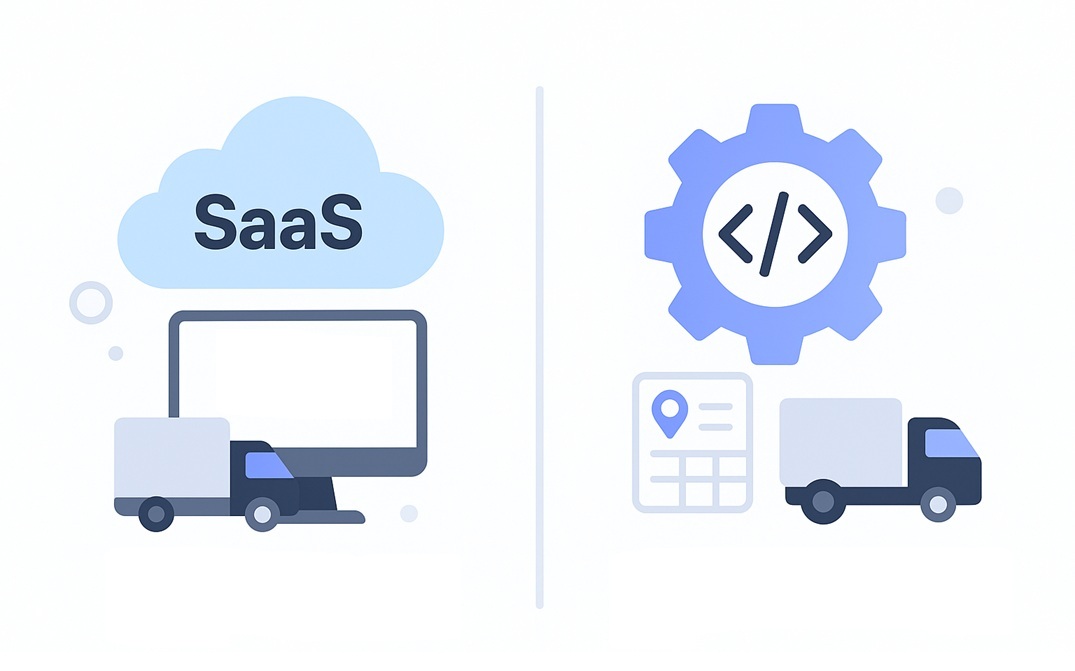
If routes rarely change and exceptions are the exception, standard SaaS planners can be sufficient. But once plans need constant adjustment and dispatchers spend more time fixing routes than managing operations, generic tools stop scaling. At that point, custom route optimization turns routing from a daily firefight into a controllable system.

Why Teams Build Route Optimization with TwinCore

Route optimization isn’t a side feature for us. Logistics software is our core focus, and routing is something we design as part of real operational systems, not demo-only planners.

We work with routing problems where constraints, exceptions, and day-to-day changes are expected. That means modeling routing rules as actual business logic from the start, designing architectures that can evolve as operations grow, and prioritizing plans that dispatch and operations teams can rely on consistently. The goal isn’t theoretical optimization, but routing that holds up in daily use and supports the way logistics teams actually work.

Ready to make routing a strength instead of a daily problem?

If you’ve outgrown generic route planners and want routing that matches how your operation runs, we can help.

We’ll review your current planning process, constraints, data sources, and systems, then design a route optimization solution that improves the metrics that matter: mileage, on-time performance, and dispatcher workload.

Talk to our logistics engineering team to see what a routing engine built for your operation looks like.

Contact us

What our clients say about us

  • TwinCore has elevated the client's customers to the next level of supply chain management. The team is highly cost-efficient from a project management standpoint, and internal stakeholders are particularly impressed with the service provider's team dynamic.

    Alex Lopatkin
    Alex Lopatkin
    Amous
  • TwinCore delivered a fully functional solution on time, meeting expectations. The highly organized team employed a DevOps approach, swiftly responded to needs and concerns, and led a productive, enjoyable workflow. Their receptiveness to client requests and feedback stood out.

    Bruno Maurer
    Bruno Maurer
    Managin Director, N-tree
  • Thanks to TwinCore’s work, the client has gained a user-friendly, stable, and scalable SaaS platform. The team manages the engagement well by being reliable and punctual; they deliver tasks on time. Their resources are also highly flexible, resulting in a truly seamless engagement with the client.

    Mischa Herbrand
    Mischa Herbrand
    Executive, CIN
  • TwinCore successfully audited the apps and converted them into modern web apps, meeting expectations. They completed the project on time and within the agreed budget. Communicating through virtual meetings, the team provided updates and responded to the client's concerns.

    JH
    Joe Holme
    IT Director, GDD Associates
  • TwinCore delivered a fully functional solution on time, meeting expectations. The highly organized team employed a DevOps approach, swiftly responded to needs and concerns, and led a productive, enjoyable workflow. Their receptiveness to client requests and feedback stood out.

    A
    Anonymous
    Managing Director, Marketing Company

Related Topics

Frequently Asked Questions


When does custom route optimization make sense?

When dispatch spends too much time correcting routes, exceptions are daily, or your rules can’t be expressed cleanly in the tool. If the planner forces workarounds, manual overrides, or separate spreadsheets to make it real, you’ve outgrown it.


What constraints can you support in the routing logic?

The usual operational stuff: time windows, service times, vehicle capacity (weight/volume/pallets), driver qualifications, equipment requirements, depot rules, customer priorities, and dependency rules (fixed stops, must-visit sequences, etc.). The point is to model your real operating rules.


Can routes be re-optimized during the day?

Yes. The system is built for day-of changes: new orders, cancellations, delays, traffic shifts, vehicle issues. Dispatch can trigger recalculation and push updated routes and stop instructions to drivers without rebuilding the whole plan manually.


How does it integrate with our current systems?

We connect to your TMS/OMS/WMS for orders, depots, constraints, and statuses; to telematics/GPS for live locations and ETAs; and to driver apps for execution signals like proof of delivery and exceptions. Routing becomes part of the workflow.


What data do you need to get started?

At minimum: orders/stops (addresses, time windows, service times), vehicle/driver profiles (capacities, shifts, skills), depot rules, and any hard constraints you already use operationally. If you have historical route + actual timestamps/ETAs, that’s even better for validation and tuning.


Scroll to top