
 LinkedIn
 Twitter
 Facebook
 Youtube

Build, Modernize, and Run Business-Critical Cloud Systems
Whether you’re launching a new product, modernizing a legacy platform, or moving workloads to the cloud, we deliver pragmatic cloud engineering. Clear scope, clear milestones, and solutions your team can maintain long-term.
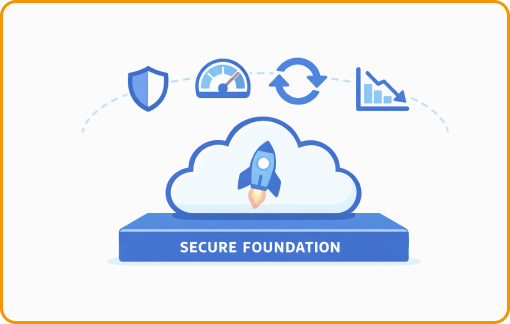
Our Cloud Services

Cloud Architecture Design

Cloud-Native Application Development

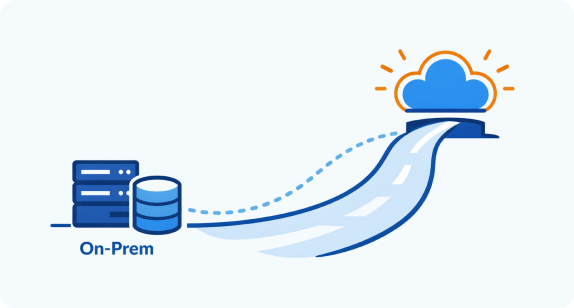
Cloud Migration & Modernization

Cloud Migration & Modernization
DevOps, CI/CD & Infrastructure as Code
Cloud Operations, Monitoring & Reliability
Cloud Providers We Support
Amazon AWS
Microsoft Azure
Google Cloud Platform (GCP)
Types of Cloud Services We Deliver
IaaS (Infrastructure as a Service)
PaaS (Platform as a Service)
SaaS (Software as a Service)
Serverless Solutions
Big Data & Analytics
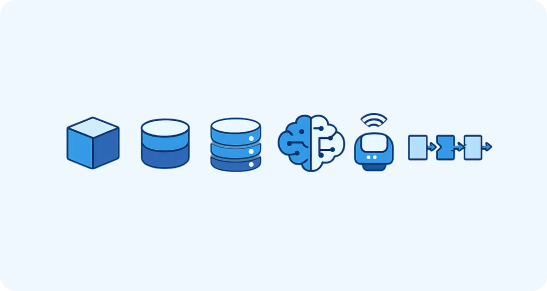
Cloud Resources We Work With
-
Virtual Machines and Kubernetes Clusters
-
Cloud Object and Block Storage
-
Cloud Databases and Caching Layers
-
AI & Machine Learning Toolkits (SageMaker, Azure ML, Vertex AI)
-
Internet of Things (IoT) Cloud Integration
-
Messaging Queues and Event Buses (Kafka, SNS/SQS, Azure Service Bus)
Industries We Serve


Our case studies
-
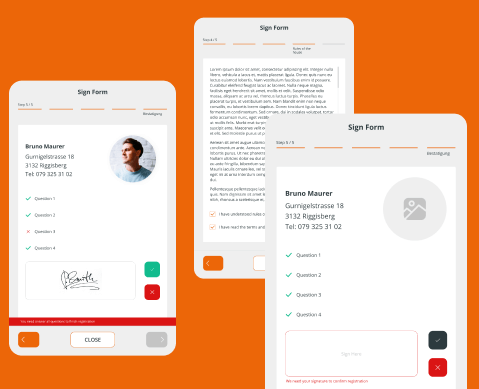 Kiosk Registration System with Certificate Printing & QR Code Verification | Case StudyTerminals is an innovative application developed to streamline the user registration process, leveraging a hybrid approach with cutting-edge technologies. Designed from scratch, the project focuses on delivering a seamless experience for users in Switzerland, allowing them to complete registration forms, generate certificates, and perform verification processes efficiently.
 -
 Custom Innovation Management & Collaboration PlatformCase study of Cross-Innovation Network, a closed CRM and custom CMS SaaS that lets teams model datasets, invite contributors, and turn complex data into clear insights.
 -
 Real-Time Load Board for Carriers and Freight BrokersCase study of a real-time load board that connects carriers and brokers, adds order tracking, predictive demand analytics, and secure payments for a US logistics firm.
Cooperation Models
Dedicated Team
Time & Material
Fixed Price
Let’s move your business to the cloud - the right way

Related Topics
-
 Top Programming Languages for Scalable Software Development
Explore the best programming languages for enterprise-grade software. See why TwinCore...
Read more -
 Software Development Outsourcing: Models, Benefits, and Best Practices
A complete guide to outsourcing software development: models, benefits, risks, and how to...
Read more -
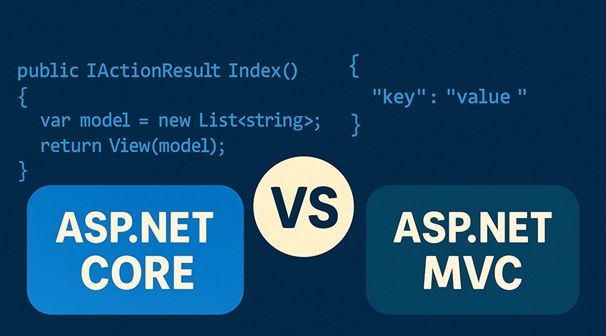 Advantages of ASP.NET Core Over ASP.NET MVC: What You Need to Know
Discover why ASP.NET Core leaves classic MVC behind. From performance to flexibility -...
Read more


Frequently Asked Questions
Cloud-native application development, legacy modernization, cloud migrations, DevOps automation, integrations, and ongoing operations. Most engagements focus on production systems where reliability, security, and cost control matter.
AWS, Microsoft Azure, and Google Cloud. The provider is selected based on your existing ecosystem, workload needs, compliance constraints, and operational requirements.
Yes. Many projects start with stabilizing and improving an existing setup: architecture review, security hardening, observability, performance tuning, and cost optimization, followed by phased modernization.
Migrations are planned per workload with phased delivery, validation steps, and controlled cutovers. When data migration is required, integrity checks and rollback planning are part of the approach to reduce operational risk.
Yes. CI/CD pipelines and Infrastructure as Code are used to make environments reproducible and deployments consistent. This reduces release risk and improves delivery speed across teams.
Security is built into architecture and delivery through access controls, encryption, network segmentation, secrets management, monitoring, and audit trails. Controls are designed to remain enforceable as the system evolves.
Dedicated teams, staff augmentation, fixed-scope delivery, and managed support. The best fit depends on your roadmap, internal team structure, and how much long-term ownership you want to keep in-house.
