30+
professionals
100+
success projects
1 week
trial offer
Clutch rating

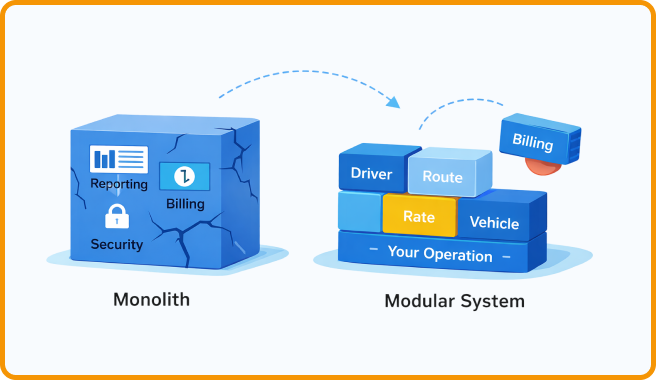
TwinCore delivers modular logistics software built from independent, production-ready modules that cover core logistics and fleet workflows. Each module has its own data model and UI, can be used on its own or combined into a larger system, and can expose APIs for integrations when required.

This is an engineering-led approach. TwinCore engineers assemble the right set of modules into a single solution, align the UI/UX into one consistent interface under your brand, and add custom modules where your process requires it.

Contact us

A Modular System You Own, Not Another SaaS You Work Around

This is not a drag-and-drop constructor. Modules are combined by engineers, not by end users, with one goal: a system that matches your process, remains stable under load, and integrates cleanly with your data sources.

The value is practical: faster time to a working MVP, lower delivery risk, and a clear path to expand later without being locked into a vendor roadmap.

When “Modules + Custom” Is the Smartest Logistics Software Strategy

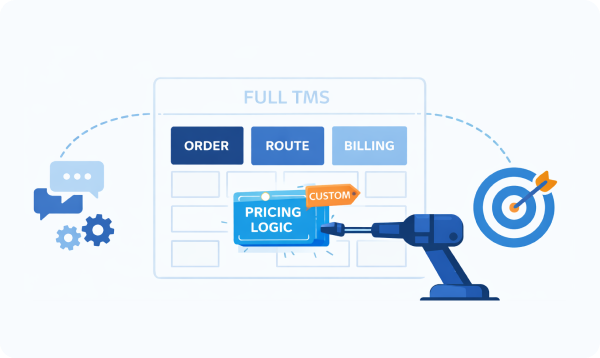
Teams typically choose “modules + custom” when a ready-made SaaS doesn’t cover the workflow, when they only need part of a full TMS, or when they want to own the software and hosting model.

It also fits companies that need a fast start using proven components, but still require custom rules, integrations, or UI decisions that SaaS products cannot support without workarounds.

What a TwinCore Module Is

Each module is a standalone functional block with its own data and UI, designed to work independently or as part of a larger system.

Deploy one module without a full platform rebuild

quickly add functionality without touching the entire system

Add modules without reworking core data flows

expand capabilities while keeping existing processes intact

Keep integration options open via APIs

connect easily with other systems and tools without limits

Maintain clear boundaries for stability

ensure each module operates reliably without affecting others

Core modules available

Drivers Module

Drivers, documents, licenses, statuses, work history

Used in: TMS, Fleet Management

This module manages everything related to drivers: profiles, compliance documents, license renewals, availability, ratings, activity logs, and incident tracking.

Vehicles Module

Vehicles, types, mileage, maintenance, service history

Used in: Fleet Management, TMS

Centralizes all fleet data: vehicle specifications, service intervals, odometer readings, insurance, documentation, and maintenance records.

Route Planning Module

Routes, constraints, stops, geodata

Used in: Route Optimization, TMS

Handles routing rules, delivery windows, constraints, vehicle types, geo-data, and optimization logic for efficient planning.

Order Management Module

Orders, statuses, links to shipments

Used in: TMS, Freight Platforms

Tracks orders through every stage, links them to shipments, and syncs updates with other modules or external systems.

Rate Engine Module

Tariffs, rating rules, delivery cost API

Used in: TMS, Pricing Engines

Calculates transportation costs using tariffs, business rules, fuel indexes, zones, weight brackets, service levels, and custom logic.

Inspection Period Module

Technical condition, inspections, service intervals

Used in: Fleet Management, TMS

Keeps your fleet compliant and road-ready. This module tracks inspection periods, technical checks, requirements, deadlines, and service notes for every vehicle. It helps prevent missed inspections and makes audits painless.

Fuel Monitoring Module

Fuel usage, anomalies, consumption patterns

Used in: Fleet Management

Tracks fuel consumption, mileage patterns, refueling events, and anomalies. Supports integration with telematics units or fuel cards to detect irregularities and reduce operational costs.

Invoices Module

Billing, charges, settlements

Used in: TMS, Freight Platforms

Handles invoicing workflows, charge calculations, and billing data. Syncs with your Rate Engine, Order Management, and accounting tools to keep financials accurate and transparent.

Shipment Consolidation Module

Consolidation rules, grouping, dispatch logic

Used in: TMS, Freight Platforms

Helps create more efficient loads by consolidating shipments based on destination, time windows, vehicle type, or cost rules. Reduces empty miles and increases asset utilization.

Dispatcher Messenger Module

Real-time dispatcher–driver communication, structured logistics messaging

Used in: TMS, Fleet Management, Dispatch Software

Keep communication inside your logistics system instead of scattered across WhatsApp, SMS, and random phone calls. Helps reduce coordination errors, speed up responses, and improve on-time performance.

How Modules Are Assembled Into One Coherent Logistics System

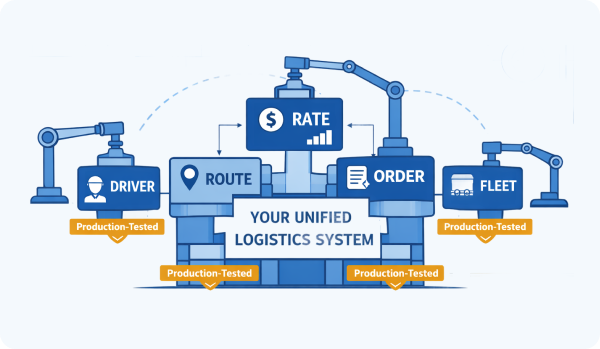
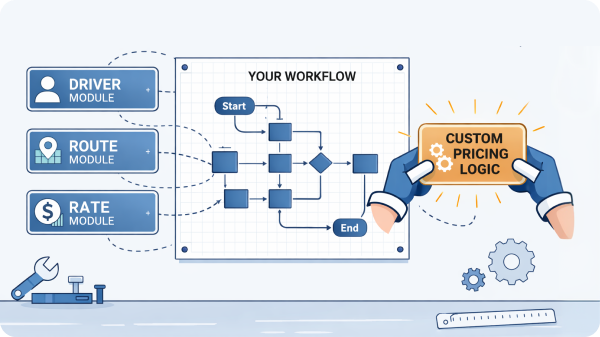
Modules are combined by TwinCore engineers to match your workflow, unify the interface, ensure performance under load, and connect integrations to your systems.

This approach is designed to keep the implementation realistic: you start with what’s already proven, customize only where your process truly needs it, and expand as requirements evolve.

Why Modular Delivery Works

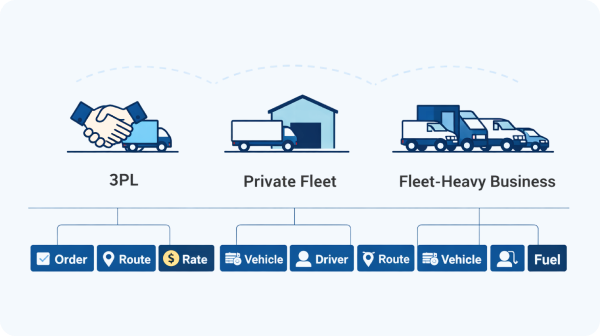
Not every company needs a full-scale TMS. Different operations require different functionality, and modular delivery keeps the scope aligned with what’s actually needed.

It also opens the same approach to fleet-heavy businesses beyond logistics providers, where fleet management workflows matter more than end-to-end transportation management.

Why TwinCore and a modular approach work together

Modular delivery only works when it is treated as an engineering discipline, not as a shortcut.

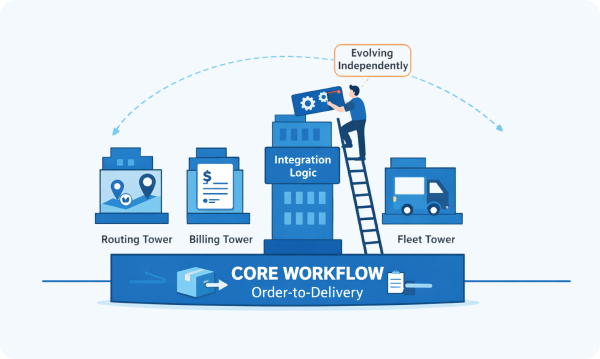
In logistics, systems tend to grow unevenly. Some areas are stable and well understood, while others change constantly due to volume, regulations, customers, or operating models. A modular approach allows each part of the system to evolve at its own pace, without forcing the entire operation to change every time one workflow does.

TwinCore applies modularity in a practical way. Modules are not generic building blocks exposed to end users. They are production-ready components designed to be assembled by engineers into a coherent system that reflects how your business actually operates.

This approach reduces delivery risk. Proven modules cover common logistics workflows, while custom development is focused only where your process is truly unique. As a result, projects start faster, remain easier to control, and scale without accumulating fragile workarounds.

How it’s built and hosted

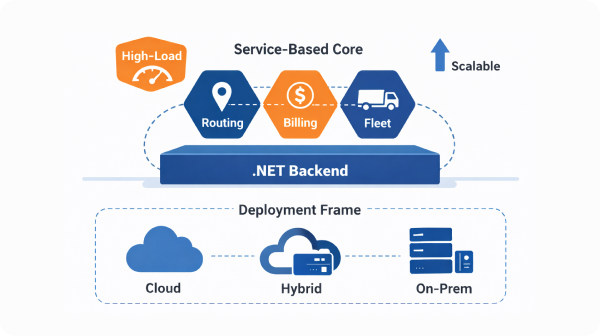
TwinCore modular logistics systems are built on Microsoft .NET with a microservices architecture designed to support high load. Hosting can be cloud or on-prem, and integrations are supported through APIs when external systems allow it.

How delivery works

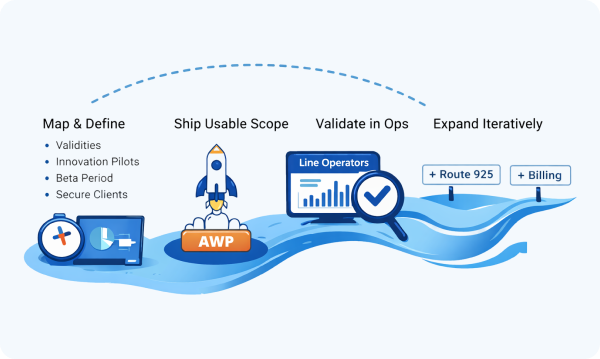
Work begins with discovery and estimation, then moves through UI/UX alignment, module development, integrations, testing, release, and ongoing support.

The delivery style stays consistent: start with a focused scope, ship something usable, and expand only after the workflow is validated in day-to-day operations.

Engagement models

Fixed scope delivery

Best when the module set, integrations, and workflow are clear from the start.

Flexible delivery

Best when requirements evolve as the team validates the solution in production.

Dedicated team

Best for ongoing development when the roadmap includes continuous expansion across modules.

Related logistics services


When modular scope grows into full execution workflows, a custom TMS provides a unified operational backbone without forcing a full rewrite upfront.

Connect individual modules to your existing SaaS platforms, carriers, and internal systems so data flows stay consistent across the operation.

Add centralized visibility and structured exception handling when multiple modules, partners, and regions need to stay aligned.

What our clients say about us

  • TwinCore has elevated the client's customers to the next level of supply chain management. The team is highly cost-efficient from a project management standpoint, and internal stakeholders are particularly impressed with the service provider's team dynamic.

    Alex Lopatkin
    Alex Lopatkin
    Amous
  • TwinCore delivered a fully functional solution on time, meeting expectations. The highly organized team employed a DevOps approach, swiftly responded to needs and concerns, and led a productive, enjoyable workflow. Their receptiveness to client requests and feedback stood out.

    Bruno Maurer
    Bruno Maurer
    Managin Director, N-tree
  • Thanks to TwinCore’s work, the client has gained a user-friendly, stable, and scalable SaaS platform. The team manages the engagement well by being reliable and punctual; they deliver tasks on time. Their resources are also highly flexible, resulting in a truly seamless engagement with the client.

    Mischa Herbrand
    Mischa Herbrand
    Executive, CIN
  • TwinCore successfully audited the apps and converted them into modern web apps, meeting expectations. They completed the project on time and within the agreed budget. Communicating through virtual meetings, the team provided updates and responded to the client's concerns.

    JH
    Joe Holme
    IT Director, GDD Associates
  • TwinCore delivered a fully functional solution on time, meeting expectations. The highly organized team employed a DevOps approach, swiftly responded to needs and concerns, and led a productive, enjoyable workflow. Their receptiveness to client requests and feedback stood out.

    A
    Anonymous
    Managing Director, Marketing Company

Related Topics

Frequently Asked Questions


Is this a self-serve builder where we assemble the system ourselves?

No. This is not a drag-and-drop builder. Modular here means the system is delivered as a set of independent components that can be combined into a larger solution. The modules are integrated and assembled by TwinCore engineers based on your requirements, data, and workflows.


Can we start with only one or two modules without building a full TMS?

Yes. Many organizations start with a narrow scope when a full TMS is not required. A single module or a small set of modules can be delivered as a standalone capability, then expanded later as needs grow or as integration coverage increases.


Can a module be integrated with our existing SaaS platform? What if there is no API?

If your SaaS platform provides APIs or reliable data export mechanisms, modules can be integrated so data remains consistent across systems. If there is no API, the options are more limited. In those cases, we assess what integration paths exist (file-based exchange, scheduled exports, database access, or vendor-supported connectors). If none are viable, the module can still operate as a separate system, but real-time synchronization may not be possible.


Where is the system hosted: cloud or on-prem?

Both deployment models are supported. Hosting depends on security, compliance, and operational constraints, as well as where your existing systems run. The architecture is designed so cloud or on-prem deployment does not restrict scalability or integration reliability.


Who supports the system two years from now?

Support can be provided by TwinCore under an agreed support model, or transitioned to your internal team or another vendor if that is a requirement. The system is built with maintainability in mind, with documented architecture, controlled integrations, and clear operational ownership to reduce dependency risk.


What does the UI/UX alignment process look like?

UI/UX alignment starts early. We typically begin with workflow mapping and low-fidelity wireframes to confirm operational paths and roles. Once the structure is approved, we move into interactive prototypes and visual design aligned to your environment. UI decisions are validated against real user workflows to avoid “good-looking” screens that do not support day-to-day work.


How do you ensure performance and stability under load?

Performance is addressed at the architecture level. Modules are designed with clear boundaries, scalable services, and controlled integrations. We implement monitoring, logging, and load-aware processing for data flows, and we validate performance through testing based on expected volumes and peak conditions. Stability is treated as a core requirement, especially where the system supports operational execution rather than reporting.


Scroll to top